Write for us!
Social policy

Why I No Longer Wear a Poppy

·
·
My father served in the RAF, reaching Senior Warrant Officer level. My brother gave thirty years leaving with the rank of NCO. Between them, they accumulated almost half a century of service to this country. When they needed support in later life, they left with navigating the casework systems of SSAFA and the Royal British Legion, filling in forms, waiting for assessments, proving their need to charity volunteers. This is what the military covenant looks like in practice, for most of those who actually served. I no longer wear a poppy. I want to explain why, because the decision is…

A Liberal Approach to Healthcare in the 21st Century: Prevention Is Better Than Cure
·
·
The debate around healthcare in the UK is too often polarised between those who advocate for a US style system (private healthcare that is determined by the ability to pay, whether through insurance, income or state support) versus the UK model (the publicly funded NHS, free at the point of use). Some argue for a hybrid of both, otherwise known as the ‘social-insurance model’ or the ‘Bismarck model’ (a health care system financed through compulsory, income-related contributions paid by employers and employees). However, regardless of the delivery system, the debate often misses a crucial aspect of healthcare which is rarely…

Politicians and the Media Need to End Their Obsession With Cutting Welfare
·
·
There is a familiar rhythm to British political life. An election looms, a budget falls short, and within days the headlines arrive like clockwork. Benefit claimants. Welfare bills. The “unsustainable” cost of supporting the poorest people in one of the world’s largest economies. Ministers queue up to talk tough. Editors reach for the same dog-eared playbook. And the cycle continues, largely unchallenged, while the real economic failures that underpin Britain’s stagnation go quietly unexamined. It is time to name this for what it is. The political and media obsession with welfare cuts is not serious economic policy. It is a…

A Liberal Approach to Education in the 21st Century: Recapturing the Concept of a Public Good
·
·
Despite being an ardent proponent of the free market, largely because of my classical liberal principles, there are some things that I believe should still be treated as a public good: one of these is education. In recent years, especially under Conservative Education Secretary Michael Gove, reforms have leaned towards privatisation and marketisation, in the form of Academies and Free-Schools. Gove envisioned that these would have far reaching effects beyond the UK and that England’s school leavers would become world-leaders in qualifications, marching up the international comparison tables. He argued that education under New Labour had deteriorated because of dumbing…
Immigration in the 21st Century: A Fair and Humane Approach
·
·
In recent years, the debate on immigration in the UK has been plagued by the following issues: its alleged impact on public services due it being ‘too high’, the daily illegal boat crossings and the most contentious issue of them all, arguments that detention seekers are afforded too much protection by international human rights law – which guarantees the right to liberty and prohibits arbitrary arrest. Consecutive governments most notably, the recent Conservative one, have talked tough on immigration without reducing overall numbers, or explaining clearly how they are made up (prime example – on average 35% of immigrants, are…

Welfare in the 21st Century: From Hand Down to Hand Up
·
·
The total welfare bill in the UK, has risen from approximately £100 billion in the early noughties, to £333.6 billion in 2025-26, a more than a threefold increase in just over twenty years, It now comprises 10% of our total GDP. It is expected to hit £400 billion by the end of the decade, according to a recent report by the Centre for Policy Studies. This unsustainable growth in welfare spending needs tackling. In this article, I am going to advocate a welfare system which is simpler, fairer and ensures that working pays better than welfare dependency. Simplification Currently there…
Where Are All the Women?
·
·
In most political Parties in the UK, men outnumber women, but in the Liberal Democrats the ratio of men to women is particularly bleak, worse even than Reform. Research published in December 2025 makes sobering reading for the Party: 33% of Lib Dem members are female, 39% of Reform members, and women’s membership of other Parties is much higher. Obviously our deputy leader and several of our MPs are women, and our one successful candidate in the Welsh Senedd election is a woman. But this success masks a growing crisis in female involvement in the Party at all levels. The…
A Liberal Approach to Solving the Housing Crisis: A Free‑Market Solution
·
·
The housing crisis in the UK has become characterised by a severe shortage of supply, record homelessness and soaring rents. Consecutive governments (both Labour and Conservative) have failed to solve many of the issues due to a lack of concerted effort to analyse beyond the headline issues and come up with solutions which favour the free market – this is precisely what aim to do in this article. I will be focusing on three of these deeper issues: Planning restrictions Planning restrictions severely constrain housing supply, creating structural deficits that drive up property prices. In the UK, restrictive land designations…
A Liberal Approach to Restructuring Local Government in England
·
·
A few years back I was tasked by my party, namely The Liberal Party, in my capacity as chair of the policy sub-committee, to formulate policies for local governance. This was a subject I had not studied before and I soon realised what a fragmented and disjointed system it is. Hence, the need for reform. England has in some places up to four layers of Local Government (Scotland, Wales and Northern Ireland all have one by contrast, namely unitary authorities) but by the same token, England is one of the most centralised states, certainly in Europe if not the OECD.…
Time for a Liberal Approach to Fiscal Policy
·
·
Fiscal policy in the UK needs a massive overhaul and indeed a fresh pair of eyes – a liberal, specifically Keynesian approach, would I believe, be a successful approach to treating the ills of the decaying UK economy. Taxation in the UK has become synonymous with overcomplexity and opaqueness: it’s time for a rethink. The British tax code is an incredible 24,000 pages long. To put that into perspective, Hong Kong’s is a mere 350 pages. Ironically, the complexity of the UK Tax Code appeals to the very rich, who can afford to employ advisers who help them to exploit…
Guns, Wealth and Welfare – Who Carries the Burden for Defence?
·
·
The argument for democratic reform on defence, taxation and the social contract. Britain is in the middle of a debate about defence spending. On the surface, it looks like a straightforward question of national security; how much should the country spend, and how quickly? But scratch beneath that surface and a far more uncomfortable set of questions emerges: who actually benefits from military power, who is being asked to pay for it, and what does the answer reveal about the kind of society Britain truly is? The answers are not flattering. The welfare-for-weapons trade-off In early 2025, Chancellor Rachel Reeves…

From Blair’s ‘Tough on Crime/Tough on the Causes of Crime’ to Placing Sticking Plasters Over Gaping Wounds Under Starmer — How Britain’s Shoplifting Crackdown Exposes a Justice System Built to Protect Property Over People, and Power Over Accountability
·
·
On Monday, Prime Minister Keir Starmer stood before the USDAW shop workers’ union and declared an end to the shoplifting “free-for-all.” It was the kind of speech that plays well in a headline cycle: tough, purposeful, protective of honest working people against those who “cheat the system.” The government announced stiffer penalties for shoplifters, 3,000 additional neighbourhood police officers, a £5 million specialist intelligence unit targeting retail crime gangs, and a new standalone offence for assaulting a shop worker. The statistics underpinning the announcement were, at best, modest. According to the Office for National Statistics, shoplifting offences fell from 516,611…
Access Denied: How the Liberal Democrat Leadership is Sidelining Women
·
·
Last week saw another interview with Ed Davey telling a Lib Dem trans activist that he had been listening to trans people in the Party after the Supreme Court ruling on the meaning of woman in the Equality Act. Yet another illustration of the leadership jumping straight to placation mode when something upsets the trans lobby… Part of a pattern The 2022 changes to the unlawful Lib Dem Definition of Transphobia are another case in point. The Party held a special meeting with trans people just prior to amending the Definition. Several were invited to the House of Commons to…
The Compassion Trap: Herbie’s Law and the Patients No‑One Cares About
·
·
A proposed law to end animal testing in UK medical research by 2035 is being sold as an act of compassion. But the real human cost of getting this wrong has been almost entirely absent from the debate — and it will fall hardest on those who can least afford it. Herbie is a rabbit. He was bred for a laboratory, tattooed on his ear, and (as the story goes) rescued before his fate could be sealed. He has since become the face of one of the most emotionally compelling campaigns in recent British politics: a push to ban all…

The Road not Taken
·
·
In the autumn of 1986, Margaret Thatcher’s government abolished road service licensing for local bus services outside London (commonly called deregulation). The logic was market orthodoxy: competition would drive down costs, encourage innovation, and serve passengers better than the inefficiencies of public ownership ever had. Almost four decades later, the verdict is in, and it is damning. Bus journeys across England have fallen from 4.6 billion in 2009 to 3.6 billion in 2024. Outside London, bus mileage has collapsed by 29% compared to 2005. In the north of England, the decline is starker still: Transport for the North reports that…

Childhood Is Precious – It’s Time to Tackle Online Harm
·
·
Many people in the Party – especially at the grassroots – are totally unaware of the extreme libertarian approach that has been adopted to a whole range of issues that are most accurately framed as ‘sexual exploitation.’ From pornography to prostitution there has been a laissez-faire attitude and a presumption that somehow these matters are all about individual choice and can even be framed as ‘empowering.’ Of course, the majority of the sexual exploitation in these cases is against women and by men (for example in the UK 88% of people in prostitution are women and buyers are 95% +…
Has the Party Become Too Libertarian for Its Own Good?
·
·
Our membership and, in particular, our activists, are overwhelmingly middle-class men. Quite what the ratio is between men and women is unclear because the Party no longer collects data on the sex of members, but apparently the ratio in the Lib Dems is worse even than in the Reform Party. Is this impacting on our policies and Party culture? Are we steadily approving policies, at our regular state Party and federal Conferences, that might well suit a lot of men, but are a disaster for women and girls? Sex work is a questionable freedom Take our policy on prostitution, for…
A Plan for Young People
·
·
In this I want to propose an approach to two issues – youth unemployment and pensions for younger people. Youth unemployment has recently hit the news. As of the final quarter of 2025, the unemployment rate for 16-24-year-olds stands at 16.1%, the highest in a decade and now exceeding the EU average of 14.7%. Total UK unemployment is at 5.2%, a five-year high, but young people are disproportionately affected, with entry-level hiring stalling amid higher payroll costs from the 2025 National Insurance (NI) hike to 15% and minimum wage increases. Meanwhile given the UK’s declining birth rate, England and Wales…
Moving the Overton Window – and the Implications for Women
·
·
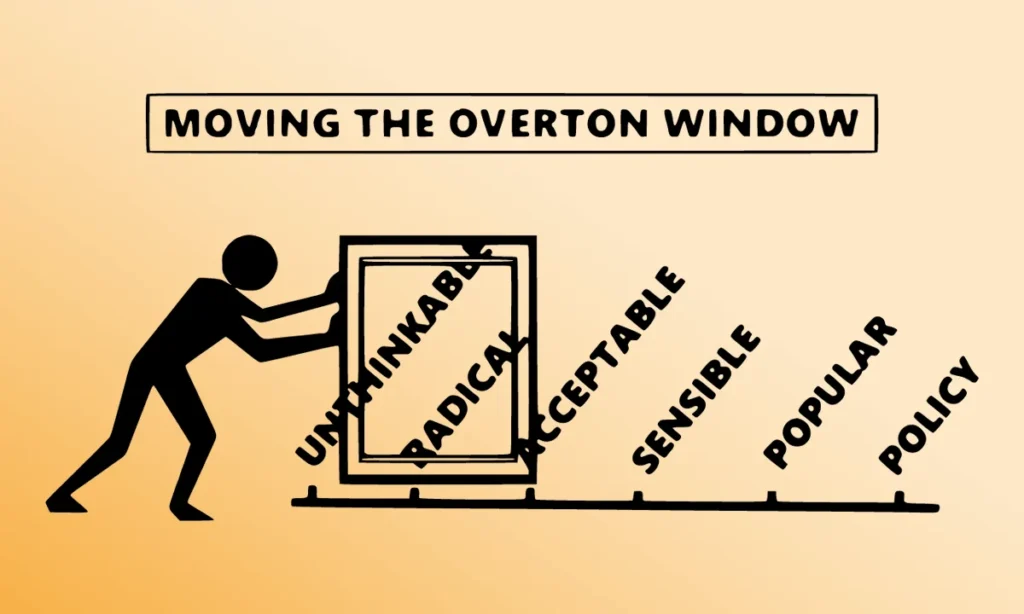
Barbara Lindsay was an inspirational Liberal Party and Liberal Democrat activist who sadly died in 2024. This is her last article. Recent conversations on language have reminded me of the ‘Overton Window’ characteristics of the shifts in the language used by GC (gender critical – believers in biological reality) people. (For anyone not familiar with this, the concept was devised by American policy analyst Joseph Overton.) The width of the window encompasses the breadth of acceptable opinion within a group, or society at large. As its activist members promote an aim and seek to push the majority towards its adoption,…