Write for us!
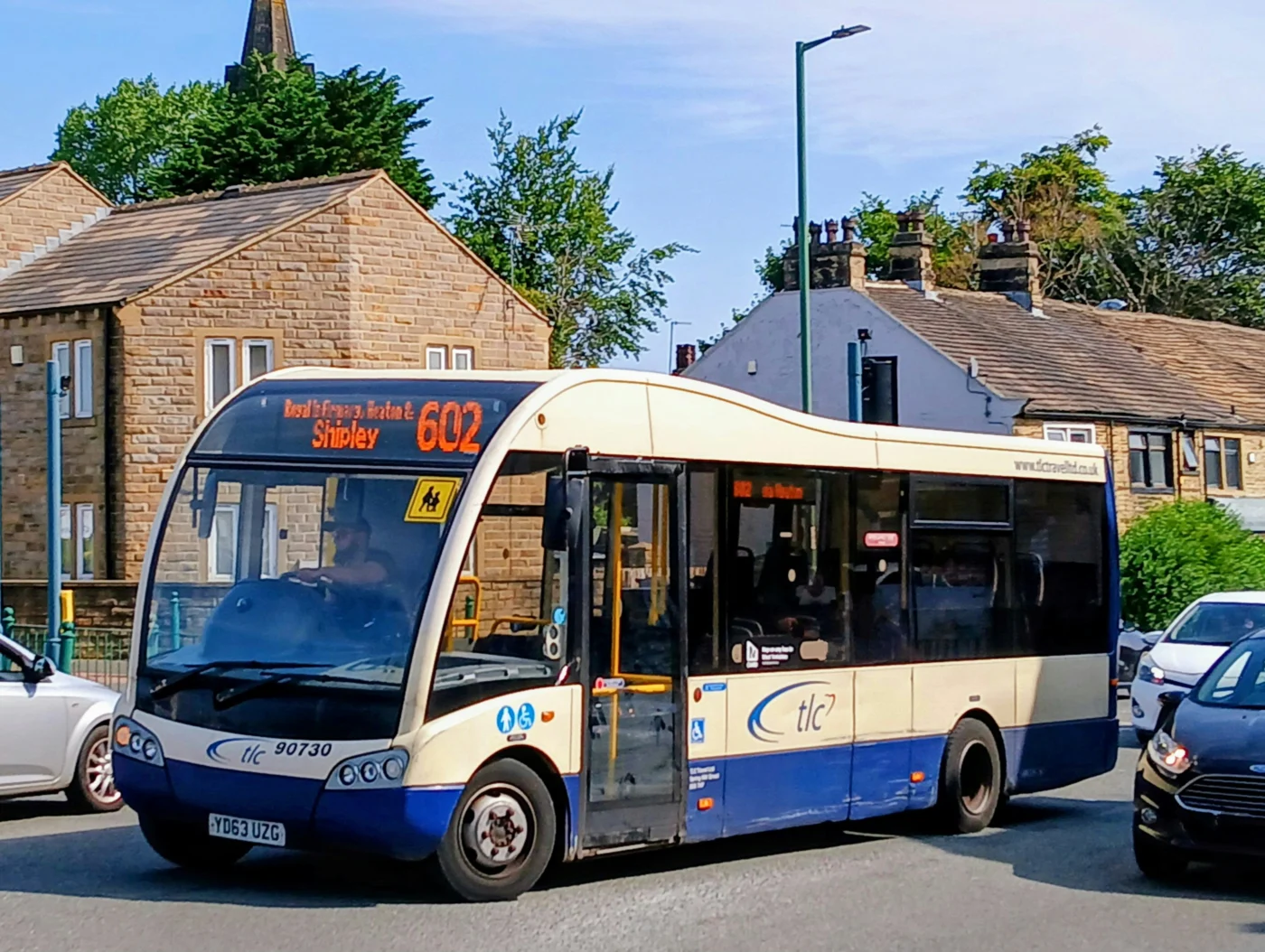
In the autumn of 1986, Margaret Thatcher’s government abolished road service licensing for local bus services outside London (commonly called deregulation). The logic was market orthodoxy: competition would drive down costs, encourage innovation, and serve passengers better than the inefficiencies of public ownership ever had. Almost four decades later, the verdict is in, and it is damning.
Bus journeys across England have fallen from 4.6 billion in 2009 to 3.6 billion in 2024. Outside London, bus mileage has collapsed by 29% compared to 2005. In the north of England, the decline is starker still: Transport for the North reports that the region now has 33% less bus mileage than in 2010, including a 22% fall since 2019 alone. Across county and unitary council areas, 18% of all bus routes simply vanished between 2018-19 and 2023-24. Meanwhile, the buses that remain have become steadily less affordable. Fares have risen by 505% since 1987 – outpacing rail fares (up 397%) and motoring costs (up 246%) and amounting to nearly double the rate of general inflation over the same period.
“After almost four decades of failed deregulation, thousands of vital services have been slashed, with passengers left frustrated at the lack of accountability.”
UK Government, 2024
Infrequent bus services hollow out our villages and towns
These figures are not abstract statistics. They describe communities severed from opportunity. Paul Miner, Head of Policy at CPRE, told a recent parliamentary inquiry that 56% of small towns in England now exist in what he called a “transport desert”. For residents of such places (many of them elderly, disabled, low-income, or simply without access to a car) the consequences are not merely inconvenient. They are structurally exclusionary.
The academic literature on transport and social exclusion is unambiguous on this point. Poor transport provision prevents people from accessing jobs, healthcare, education, and social connection. Research has found that an estimated 10% of hospital outpatient appointments are missed due to transport problems. People on low incomes without cars make, on average, only 706 trips per year, compared to 1,618 trips for high-income car owners – a mobility gap that translates directly into a participation gap. In rural areas, nearly a quarter of older people live more than two and a half miles from a supermarket, and 45% live more than five miles from a hospital.
Critically, it is not just the absence of services that imposes costs. The irregularity of surviving services has its own chilling effect. A bus that runs twice daily, or only on weekdays, or only until early evening, is not merely inconvenient for commuters, it is functionally useless for them. Employment in the modern economy demands reliability: shift workers, zero-hours contractors, carers, and those in retail or hospitality can only work if they have a reliable method of transport. No bus = no job. Deregulation did not just shrink the network – it made much of what remains too unpredictable to be any use.
The great irony of deregulation is this: it did not remove public funding from buses. It simply removed public control over where that money went. Today, public funding accounts for 44% of all bus industry income in England (roughly the same proportion as before the pandemic). The market failed to make bus services self-sustaining. All that deregulation achieved was the privatisation of profits on commercially attractive routes, and the socialisation of losses on the routes that matter most to those with fewest alternatives.
The case for a ‘Universal Service Obligation’
The concept of a Universal Service Obligation (USO) is well established in British public life, even if it has not yet been applied to buses. The Royal Mail is legally required to deliver letters to every address in the United Kingdom, six days a week, at a uniform price (although the UK Govt is currently failing to adequately enforce this key performance indicator). Telecommunications providers must ensure basic broadband access for all households. Electricity and gas suppliers must offer tariffs to all customers regardless of location. In each case, the principle is identical: some services are so fundamental to participation in modern society that their provision cannot be left entirely to commercial logic and shareholder interests.
The case for applying this principle to bus services is, if anything, stronger than the case for postal services. In an era of email and e-commerce, the daily letter is a convenience rather than a necessity for most people. But the ability to travel – to reach a workplace, a GP surgery, a school, a supermarket, a court appearance, a job interview, remains a requirement for life in contemporary Britain. Mobility is not a luxury. It is infrastructure for human agency.
A bus that runs twice daily is not merely inconvenient for commuters — it is functionally useless to them.
What would a bus USO look like in practice? The postal USO offers a useful template. Its dimensions include: geographic scope (coverage of all addresses), service frequency (six-day delivery), price controls (uniform pricing), and quality standards (measurable delivery targets). A bus USO would need to define analogous parameters. Coverage standards would specify the maximum distance any household should be from a bus stop. Frequency standards would set minimum service levels — perhaps a bus every hour during daytime on weekdays, with defined standards for evenings and weekends. Connectivity standards would require that services link communities to key destinations: employment centres, hospitals, schools, and major retail hubs. Fare standards would cap prices in real terms and require affordable passes.
The current Bus Services (No. 2) Bill, progressing through Parliament at time of writing, takes a partial step in this direction by introducing a definition of ‘socially necessary bus services’ and requiring enhanced partnerships to list such services and protect them from unilateral withdrawal. This is welcome, but it falls far short of a USO. It defines a floor beneath which services must not fall without due process; it does not define the minimum standard of service to which all communities are entitled. The distinction matters enormously. The current approach asks: how do we protect what we have? A USO asks: what does every community deserve, and how do we deliver it?
The Network Effect
A frequently underappreciated aspect of bus provision is the network effect: the value of a bus route is not simply a function of the number of people who use it, but of the connections it enables. A lightly used rural service that connects a village to a market town is worthless in isolation, but if it connects to a town-to-city service, and that service connects to intercity rail, then that single rural route is part of a network that gives its users access to the entire country. Deregulation, by treating each route as a discrete commercial proposition, systematically destroyed these connections. Services were withdrawn piecemeal, and the network unravelled.
A USO framework would need to embed this networked logic explicitly. Service standards would not be assessed route-by-route but at the level of the network: does this community have a reliable, affordable chain of connections to employment, healthcare, and cultural life? This requires coordination between services, something that the market model structurally prevents, and that only public or publicly accountable governance can deliver.
The case for Public Ownership
Advocates of deregulation sometimes argue that the problem is not the model itself, but inadequate implementation – that more competition, or better-designed subsidy mechanisms, could yet make the market work. The evidence from England’s own recent history refutes this. The one part of England where buses have consistently worked well is London, where services have never been deregulated. Transport for London sets routes, frequencies, fares, and standards; private companies compete for franchised contracts to operate services within those parameters. The result: London bus mileage has remained broadly stable since 2005, while outside London it has collapsed by nearly a third.
The more recent experiment in Greater Manchester offers an even more compelling illustration. Between 1986 and 2023, Greater Manchester’s buses were fully deregulated. By the early 2020s, the network was nearly 40% smaller than it had been in the 1970s. A single journey could cost up to £4.50. On some routes, buses were late a third of the time. More than 20% of services were dependent on public subsidy to survive (and that figure was rising, even as the network shrank!)
Fares have risen by 505% since 1987, nearly double the rate of inflation – while the network has steadily contracted.
In September 2023, Greater Manchester began rolling out the Bee Network: a franchised bus system under local public control, modelled on London’s approach. Private operators still run the buses, but Transport for Greater Manchester sets routes, timetables, standards, and fares. The results, after two years, are striking. Passenger numbers on the first routes to come under local control rose 12-14% year-on-year. Punctuality improved from around 69% to consistently above 80%. Average ticket costs fell by 15%. A £2 single fare cap was introduced and maintained. Customer satisfaction reached 85%. The franchise rollout was completed ahead of schedule and on budget (the latter being, as one commentator dryly noted) a rarity for a public project of any scale.
What Greater Manchester demonstrates is not merely that public control can work, but that it can work better than the market, and that the improvements are felt most acutely by those who most depend on the bus. Cheaper, more frequent, more reliable services disproportionately benefit those without cars: the elderly, the disabled, the young, the low-income. These are precisely the people the deregulated market has most consistently failed.
Beyond the Franchising Option: The Question of ‘Ownership’
The Bee Network model is franchising, not public ownership in the traditional sense: the public sector specifies, regulates, and funds the network; private operators run the vehicles under contract. This model has real advantages — it harnesses private-sector operational efficiency within a framework of public accountability and the Bus Services (No. 2) Bill is right to extend franchising powers to all local transport authorities, not just Mayoral Combined Authorities.
But franchising is not the end of the conversation about ownership. The Bill also restores the right of councils to establish their own bus companies, a power abolished by the 2017 Bus Services Act. This matters. In some contexts, especially in rural areas where commercial operators have no interest in the market at all, direct public provision may be the only viable model. Demand-Responsive Transport (flexible, bookable minibus services) that adapt routes to real-time passenger need, is increasingly seen as the appropriate model for low-density rural areas. Such services require active management and flexibility that franchise contracts may not accommodate. They may need to be operated directly, or through community transport organisations with close local knowledge.
The broader philosophical question is this: should the infrastructure of social participation (the means by which people access work, healthcare, and community) be primarily organised around the extraction of profit? The postal service, the NHS, and the school system are all answers to the same question, and they all answer it the same way. Buses have been the outlier. The evidence of four decades suggests it is time to bring them into line.
How to Fairly Fund bus services
Every argument for expanded and improved public transport eventually confronts the same question: who pays? The answer has to be grounded in both economic reality and democratic legitimacy and it has to address the deep inequity in the current system, in which rural communities bear the highest costs of poor provision while receiving the least public investment.
Consider the existing funding landscape. For financial year 2022/23, non-metropolitan bus services received just £17.73 per capita in public support, compared to £35.91 in metropolitan areas and £105.80 in Greater London. Rural households already spend between 20-30% more on transport than urban households – a direct consequence of the absence of viable alternatives. Transport poverty in rural areas is thus a compound injustice: high costs of car ownership imposed by necessity, combined with meagre public investment that fails to provide alternatives. A fair funding model must correct this imbalance, not perpetuate it.
The principles of Fair Funding
A sustainable, equitable funding model for public transport as a universal service would need to rest on several principles. First, need-weighting: public funding should be allocated based on the gap between what a community requires and what the market will provide unaided. Rural and remote areas, where commercial provision is thinnest and need is highest, should attract proportionately greater public investment. The current allocation model which has historically been competitive, rewarding councils with the capacity to write strong bids, systematically disadvantages precisely the authorities serving the most underserved communities. The Labour government’s 2025 allocation, calculated on deprivation and population need, is a step in the right direction; the principle should be entrenched.
Second, the cross-subsidy principle: profitable urban and inter-urban routes should subsidise loss-making but socially necessary rural routes. This was, in fact, the model that existed before deregulation, when large bus companies were required to serve their entire licensed territory – profitable urban corridors funded the less commercially viable rural services. Deregulation destroyed this cross-subsidy arrangement, privatising the profitable routes and leaving rural services dependent on discretionary subsidy. Franchising partially restores it at the regional level; national coordination is needed to extend it to areas without strong regional governance.
Rural households already spend 20-30% more on transport than urban households — a direct consequence of the absence of viable alternatives.
Third, integration with the health and welfare budget: the NHS, the Department for Work and Pensions, and local social services all carry significant costs that arise directly from poor transport provision. Missed hospital appointments, delayed employment uptake, greater social isolation among older people, higher emergency service callouts, these are all transport externalities that appear in departmental budgets other than transport. A proper accounting of what poor bus provision costs the public sector across all departments would likely dwarf the investment required to fix it. Bus funding should be understood not as a cost but as a preventative investment, in health, in employment, in social cohesion.
Fourth, hypothecated revenue: specific funding streams dedicated to public transport provision, insulated from the year-to-year pressures of council budget cycles. The current model – in which local authorities make discretionary decisions about bus subsidies in competition with social care, housing, and other demands, has produced an inexorable decline in supported services over the past fifteen years. A national transport funding settlement, with ring-fenced allocations for universal service standards, would provide the stability that long-term network planning requires.
What would it actually cost?
Estimates of the cost of genuinely universal bus provision vary, but the scale is not beyond reach. The government’s current bus investment in England (roughly £1.1 billion in 2025-26) is already substantial, though it is dispersed across multiple funding streams and does not come close to restoring pre-2010 provision. Research suggests that restoring the national network to 2005 levels of service outside London would require a sustained increase in annual public investment of several hundred million pounds – significant, but comparable to a modest fraction of the HS2 capital budget, or to the savings achievable from reduced NHS costs and higher employment rates that better transport would produce.
The Bee Network’s experience in Greater Manchester is instructive here too. The franchise model reduced the cost of running franchised services by a third compared to the cost of intervening in failing commercial services. Public control is not necessarily more expensive than the alternative, especially when the amount of public money required to prop up a failing market through emergency subsidies and social care costs is factored in. The question is not whether Britain can afford universal bus provision, but whether it can continue to afford not to have it.
Choosing the Road to Take . . .
The 1985 Transport Act was presented as an act of liberation: freeing the market, freeing operators, freeing passengers from the dead hand of bureaucracy. What it actually liberated was private capital from any obligation to serve communities that could not generate profit. The road not taken in 1986 was the one that understood mobility as a social good – as the infrastructure of opportunity, as much as roads, schools, or the National Health Service.
Britain can still choose that road. The building blocks are in place: a government committed to reversing decades of failed deregulation; a Buses Bill that will extend franchising powers and restore the right to create publicly owned bus companies; the Bee Network as proof of concept that public control works; and a growing body of academic and practical evidence that the costs of inaction — in health, employment, social cohesion, and regional inequality — dwarf the costs of action.
What is still missing is the conceptual leap: from thinking about buses as a commercial service that the state subsidises at the margins, to thinking about them as a universal right that the state guarantees and the market assists in delivering. A Bus based Universal Service Obligation would provide the framework for that leap, setting standards, establishing entitlements, and requiring that every community in Britain have meaningful access to the transport network, regardless of whether serving them is profitable.
The question is not whether Britain can afford universal bus provision. It is whether it can continue to afford not to have it.
The alternative is to continue as we are: to accept that where you are born, or where you can afford to live, will determine whether you can get to work, to the doctor, to the shops, to the world. That is not a transport policy. It is a geography of inequality and one that deregulation did not intend to create, but has, and has spent four decades entrenching.
Every post box in the country bears a promise: that wherever you are, the Royal Mail will reach you. It is time to make the same promise about buses.