Write for us!
UK constitutional law

The New EHRC Code Demonstrates Why Sex‑Based Laws Need a Root‑and‑Branch Review

·
·
Ed Davey, Leader of the Liberal Democrats, and Marie Goldman, the Liberal Democrat Spokesperson for Women and Equalities, have recently written to Bridget Phillipson protesting the publication of the EHRC’s new Code of Practice for the Equality Act 2010 and declaring it not fit for purpose. Quite how balanced the evidence base was in reaching this conclusion is unclear. Nevertheless, their letter calls for the need for post-legislative scrutiny of the Gender Recognition Act and the Equality Act by a cross-party committee, “Taking evidence from all communities who have been impacted.” It suggests that the purpose of this is to…

Speaking About Democracy in the House of Lords
·
·
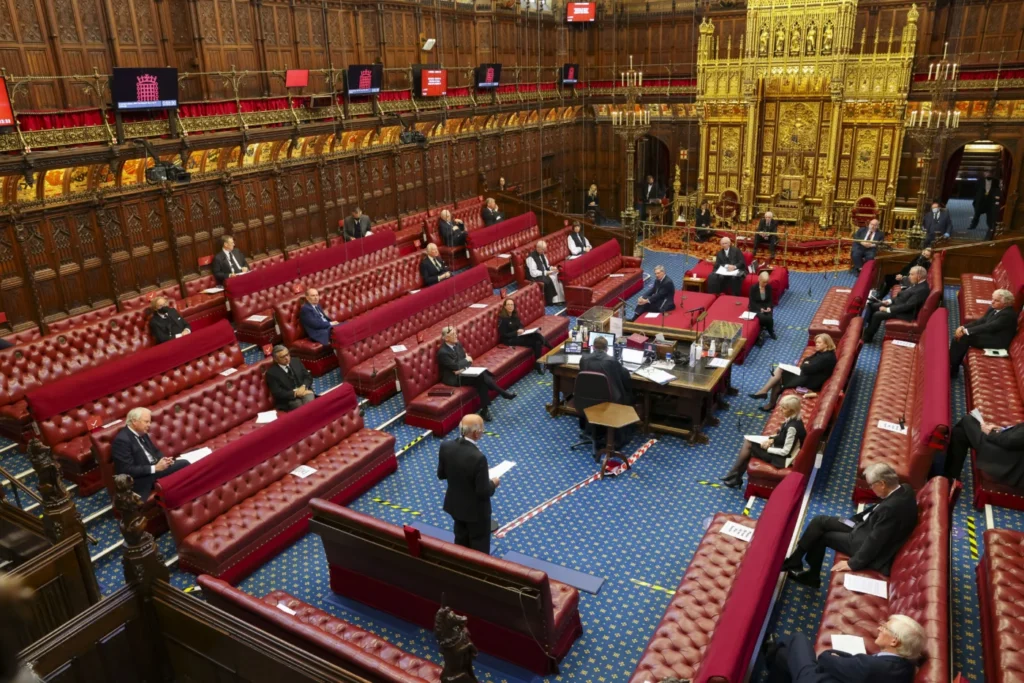
I spoke in the House of Lords on Monday about the irony of raising issues of democracy in what is now an entirely appointed chamber. My expectation when I entered the House in 1999, as a nominee of Paddy Ashdown, was that I would only serve for a few years before contesting elections for membership of the House in the promised, but never delivered, phase two of reform, promised after Tony Blair and Labour won the 1997 general election. Reform has been extremely slow I never thought that it would take 29 years to complete phase one, with the removal…

A Liberal Approach to Restructuring Local Government in England
·
·
A few years back I was tasked by my party, namely The Liberal Party, in my capacity as chair of the policy sub-committee, to formulate policies for local governance. This was a subject I had not studied before and I soon realised what a fragmented and disjointed system it is. Hence, the need for reform. England has in some places up to four layers of Local Government (Scotland, Wales and Northern Ireland all have one by contrast, namely unitary authorities) but by the same token, England is one of the most centralised states, certainly in Europe if not the OECD.…
The Commissioner Who Lost His Neutrality…
·
·
There is a principle at the heart of British policing so fundamental that it predates the modern democratic state: the constable, whatever their rank, enforces the law impartially and takes no political sides. It is this principle that distinguishes a police service from a political instrument. It is also the principle that Metropolitan Police Commissioner Sir Mark Rowley has, by any honest assessment, repeatedly and seriously compromised. The evidence is not a matter of interpretation. It is a pattern of documented public statements, selective enforcement decisions, and a conspicuous failure to fulfil a clear legal duty, one that sits in…

“Does Magna Carta Mean Nothing to You? Did She Die in Vain?”
·
·
In the current political climate and with the increase in the intolerance of others, human rights have acquired a curious reputation. To listen to certain rightward leaning voices on the airwaves, one might conclude that they are a recent foreign invention – a bureaucratic imposition dreamed up by progressive ‘lefty’ lawyers in Strasbourg to frustrate the will of the British people. Nothing could be further from the truth. The idea that every human being possesses inherent dignity that no state may trample upon is not a creation of the twentieth century. It is, in fact, one of the oldest political…
Guns, Wealth and Welfare – Who Carries the Burden for Defence?
·
·
The argument for democratic reform on defence, taxation and the social contract. Britain is in the middle of a debate about defence spending. On the surface, it looks like a straightforward question of national security; how much should the country spend, and how quickly? But scratch beneath that surface and a far more uncomfortable set of questions emerges: who actually benefits from military power, who is being asked to pay for it, and what does the answer reveal about the kind of society Britain truly is? The answers are not flattering. The welfare-for-weapons trade-off In early 2025, Chancellor Rachel Reeves…

How Not to Make a Magna Carta
·
·
A “New Magna Carta” was one of Ed Davey’s brand-new announcements at his speech to the Spring Conference on Sunday (15 March 2026). Let’s set aside the obvious question of how this has suddenly appeared as a new LibDem policy proposal without any consultation with the membership, and what this means for internal party democracy. After all, few Liberal Democrats would disagree with the principle of a written constitution. And it is certainly consistent with liberal values. But was what Ed was proposing really a good idea? I’m going to say no. It looks to me like he has taken…