Write for us!
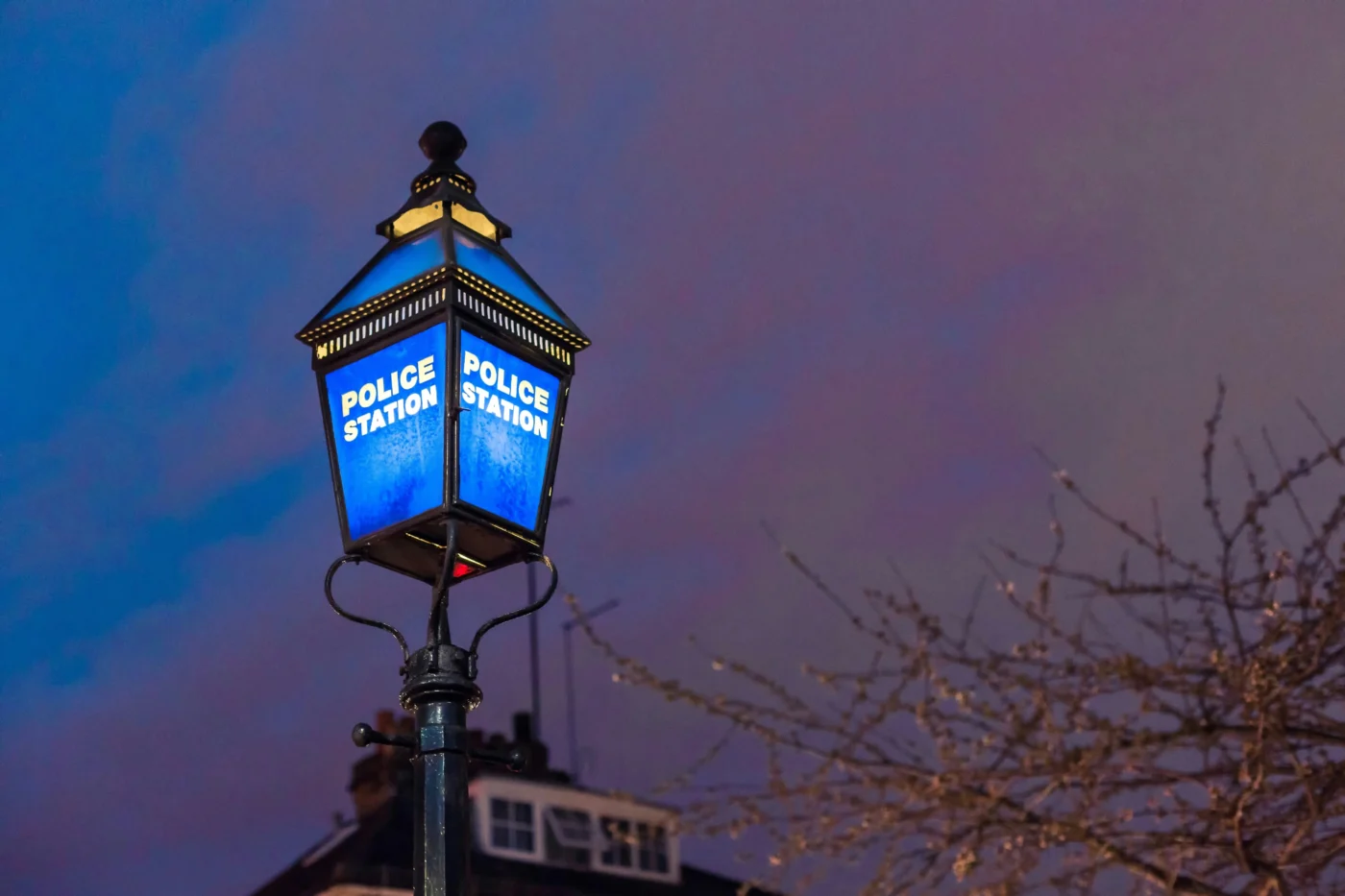
There is a principle at the heart of British policing so fundamental that it predates the modern democratic state: the constable, whatever their rank, enforces the law impartially and takes no political sides. It is this principle that distinguishes a police service from a political instrument. It is also the principle that Metropolitan Police Commissioner Sir Mark Rowley has, by any honest assessment, repeatedly and seriously compromised.
The evidence is not a matter of interpretation. It is a pattern of documented public statements, selective enforcement decisions, and a conspicuous failure to fulfil a clear legal duty, one that sits in increasingly uncomfortable contrast to the vigour with which the Met has policed those on the other side of the same political debate.
The lie about the Palestine Solidarity Campaign
Let us start with what is, in constitutional terms, the most straightforward failure: the Commissioner made a verifiably false public statement about a legitimate political organisation who are lawfully allowed to protest the actions of Israel against the occupied Palestinian population. These Israeli actions are widely viewed as war crimes and even claimed by some observers to be genocide.
Rowley publicly claimed that the Palestine Solidarity Campaign (PSC) had organised or called for marches targeting synagogues. The PSC rebutted this directly and with evidence. No corroboration of the Commissioner’s claim has since emerged. The damage, however, had been done. By falsely framing a political organisation that campaigns for Palestinian rights as a threat to Jewish places of worship, Rowley deployed the authority of his office to delegitimise a lawful protest movement on behalf of one side in a deeply disputed political debate.
Any regional Chief Constable who made equivalent false statements about a lawful political organisation would face immediate and serious scrutiny from their Police and Crime Commissioner. In Rowley’s case, the oversight mechanisms have remained conspicuously quiet. The statement stands un-corrected and un-apologised for.
A pattern of political positioning
The PSC incident is not isolated. Rowley’s public statements on Iran, barely credible statements about terror incidents, and his repeated framing of the conflict in terms that align with one community’s political position rather than his role’s neutral requirements have placed him, rhetorically and substantively, on one side of a geopolitical argument that has no business being adjudicated by the head of a police force.
The Met’s policing of pro-Palestinian demonstrations has compounded this. Courts have on occasion found the force’s restrictions on such protests to be unlawful. The pattern, more aggressive policing of pro-Palestinian events, a Commissioner who makes false statements damaging to a pro-Palestinian organisation, and public rhetoric that reads as advocacy rather than neutrality, is not accidental. It is a posture, and it constitutes a breach of the constitutional requirement that the office of Commissioner be exercised without political favour.
The war crimes dossier that was ignored
It is here that Rowley’s failure moves from political misconduct into what may be a dereliction of legal duty.
The facts are established. Data obtained from Israeli authorities confirms that over 2,000 British nationals have served in the Israel Defence Forces during the Gaza conflict. A 240-page evidential dossier was formally submitted to the Metropolitan Police’s own war crimes unit, naming specific British individuals and detailing specific alleged acts, including the targeted killing of civilians and aid workers. The International Court of Justice has stated that there is a plausible case to be made that genocide is being committed in Gaza and it has reminded all member states (on more than one occasion) of their obligation to prevent such crimes. The Public Interest Law Centre and prominent lawyers including Michael Mansfield have stated clearly that British nationals who participated may be liable for grave breaches of international law.
The Commissioner’s duty upon receiving such a dossier is not complicated. He is required to investigate. It is then for the Crown Prosecution Service (not the Commissioner) to decide whether the evidence meets the threshold for prosecution. Rowley’s obligation ends at the investigative stage, but it is precisely there that it appears to have stalled completely. No investigations, never mind referral for prosecution, have followed. No public account of what investigative steps were taken has been offered. No explanation of why a named, evidenced dossier did not result in visible investigative action has been forthcoming.
The double standard that cannot be ignored
This failure is rendered more troubling still by the context in which it sits. Some British nationals who have travelled abroad to join foreign armed groups have been prosecuted under terrorism legislation and imprisoned. British nationals who joined the IDF, a force operating in territory the UK government itself regards as illegally occupied, and whose conduct is the subject of proceedings before the International Court of Justice – have faced no equivalent scrutiny whatsoever.
Baroness Warsi, former Conservative Party chairwoman and Foreign Office minister, has raised this inconsistency directly: the principle of national loyalty and the obligation not to fight in foreign wars is applied to one community and not to another. Under the Foreign Enlistment Act 1870, British nationals fighting for a foreign state at war with another state with which the UK is at peace may be committing a criminal offence. Following the UK’s recognition of a Palestinian state, legal observers argue that this provision may now apply directly to those who served in the IDF.
The Foreign Office does not collect data on Britons serving in the IDF. The Met has not explained its inaction. The double standard operates in plain sight, without apology or accountability.
Who speaks for Britain’s Jewish Community – and why it matters
Underpinning much of this is a further distortion that the media has largely failed to challenge: the consistent presentation of Rabbi Ephraim Mirvis, the former Chief Rabbi, as the authoritative voice of Britain’s Jewish community. In reality, his position represents only the United Hebrew Congregations which is merely one strand of Orthodox Judaism. He does not speak for Reform, Liberal, Masorti, or Haredi communities, nor for organisations such as Na’amod, Jewish Voice for Labour, or Jews for Justice for Palestinians, all of which represent Jewish voices that are explicitly critical of Israeli government policy. Sadly, this is also the position taken by the Government, and opposition parties.
When the Commissioner, the UK Government and the media treat one faction’s political position as the definitive view of an entire community, they do a disservice both to the diversity of Jewish opinion and to the integrity of public debate. It allows criticism of Israeli government policy, which is the position of significant numbers of Jewish Britons, to be deliberately mischaracterised as hostility to Jewish people as a whole, and it lends a false communal authority to political statements that are in fact contested within the community they purport to represent.
Accountability cannot be optional
The constitutional requirement of political neutrality and the legal duty to investigate serious crime are not discretionary features of the Commissioner’s role. They are its foundation. A Commissioner who makes false statements about lawful political organisations, who adopts a public posture that aligns with one side of a contested geopolitical debate, and who fails to visibly investigate a credible, evidenced dossier of alleged war crimes involvement by British nationals has not merely made errors of judgement. He has called into question the basic legitimacy of his tenure. MOPAC, the London Assembly’s Police and Crime Committee, and the Independent Office for Police Conduct have the tools to pursue these questions. The question is whether they have the will to do so, and whether the public, and/or the press, will demand it.