Write for us!
Politics & Philosophy
Exploring the ideas, values, and philosophical foundations that shape liberal politics.

Why World Government Would Be a Bad Idea

·
·
In 1964, the Labour Party manifesto declared an aspiration for a single world government Labour always regarded the cold war strategies as a second best, forced on us by Russia’s obstinacy and remained faithful to its long-term belief in the establishment of east-west co-operation as the basis for a strengthened United Nations developing towards world government. World Government is not a mainstream idea in UK politics – and I can’t imagine today’s Labour Party going there. But within liberal and progressive circles, there’s some sympathy for the concept, presumably motivated by that liberal sense of internationalism and a desire to…

Lost in Translation: The Art of the Misquote
·
·
Few things are more confidently delivered, or more frequently wrong, than a famous quotation. We misquote for all sorts of reasons – faulty memory, wishful thinking, political convenience, or simple repetition of someone else’s error. But the misquote is rarely innocent. More often than not, the distortion tells us something interesting about the distorter. “Elementary, my dear Watson” Sherlock Holmes never said it. Not once across all of Arthur Conan Doyle’s stories. Holmes does say “elementary” in some stories, and obviously in the stories he does address Watson, but never together in that form. The phrase was cemented through stage…
Sex and Gender – an Extended Essay
·
·
So given the recent article “Identity is a human right” (Liberal Voices – George Cooper – 24 June) – I thought I would put my thoughts down on the sex and gender debate here. In this case from what I have called myself Phronetic Liberalism. Liberalism is an influence, but so are some other philosophical strands – from Ancient Greece and Rome, Mills Utilitarianism and William James Pragmatism. My starting point is that any conclusions must consider the practical outcomes for businesses and people in real life. This reflects the influence of Pragmatism in my framework. From this starting point,…
It’s Complicated and Superficial Knowledge Doesn’t Help
·
·
Any serious discussion of the Israeli Palestinian conflict risks becoming incomplete when it treats the Palestinian Nakba as the only refugee tragedy born from the collapse of the British Mandate and the wars that followed. The suffering of Palestinian Arabs in 1948 was profound and historically significant. Hundreds of thousands were displaced during a brutal conflict whose consequences remain unresolved today. But modern discussion often overlooks an equally consequential human tragedy: the destruction of ancient Jewish communities across the Arab and wider Middle Eastern world. Tragedies affected both communities Between roughly 800,000 and 1,000,000 Jews fled, were expelled, or were…
The Ballot and the Manipulated: Has Democracy Lost Its Way?
·
·
Other than being friends, Dan and I don’t have much in common on paper. He was born into poverty in Liverpool, left school at sixteen, joined the army, protested nukes at Greenham Common, drove taxis, raised a couple of children alone on next to nothing, and arrived at philosophy and anarchism through sheer intellect led bloody-minded curiosity. He’s precisely the kind of intellect that Stalin would have sent to Siberia. Me on the other hand, I came from a middle-class background that turned out to be as fractured as any – a mother who resented me, an early exit from…
Why Game Theory Is Breaking Britain – but Could Also Save It
·
·
Game Theory examines when and why people choose to cooperate or compete. Its central insight is that our decisions are shaped not only by what we want, but by what we expect others to do. Well known game theory scenarios include the Prisoner’s dilemma, the Cold War, and on a simpler scale, even Rock, Paper, Scissors. An important aspect of Game Theory relates to whether and why we choose to cooperate or compete. Researchers found that the success of either strategy is dependent on how others in the system behave, and that people instinctively know this. Our decision-making routinely includes…

Proportional Representation Is Back on the Agenda but Which Kind?
·
·
When arguing for proportional representation in a country where voters have become used to first past the post, we hit the problem that voters expect their MP to be a good constituency MP, that is a kind of social worker who will sort out their problems if they’re unfairly treated by the state. Proportional representation can’t happen when you have seats returning one representative. Hence, under proportional representation, voters don’t get a single representative dependent exclusively on their votes – except with Additional Member Proportional, the system used in London and Scotland, they can. In London, the Assembly has 25…

“Does Magna Carta Mean Nothing to You? Did She Die in Vain?”
·
·
In the current political climate and with the increase in the intolerance of others, human rights have acquired a curious reputation. To listen to certain rightward leaning voices on the airwaves, one might conclude that they are a recent foreign invention – a bureaucratic imposition dreamed up by progressive ‘lefty’ lawyers in Strasbourg to frustrate the will of the British people. Nothing could be further from the truth. The idea that every human being possesses inherent dignity that no state may trample upon is not a creation of the twentieth century. It is, in fact, one of the oldest political…
The French Revolution and Human Rights – Early Steps Toward Modern Liberalism
·
·
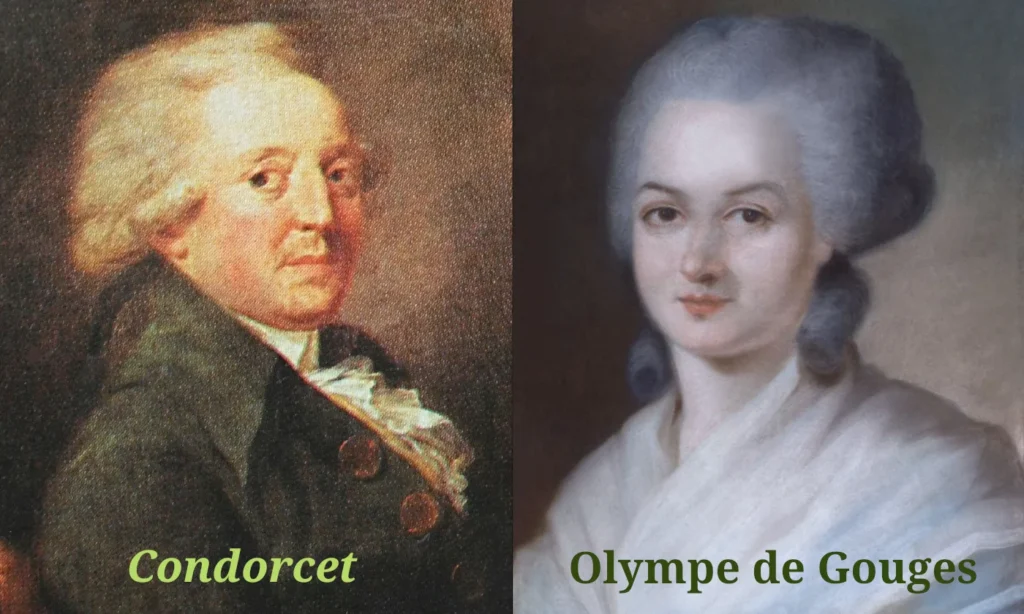
The impression most people have of the French Revolution is a one of sensible moderates who were overcome by the radical extremists of Robespierre who then drowned the Revolution in blood. Jonathan Israel doesn’t dispute that part of the story but places on center stage a group of democratic republicans who briefly gained control of the Revolution and came close to establishing the first true modern democracy – before Robespierre staged the coup that led to them being sent to the guillotine. The Roots of the Revolution in the Radical Enlightenment Johnathan Israel has made the Enlightenment his main specialisation.…
Returning Fallibilism to the Forefront of Liberalism – The Importance of Maintaining Clear Philosophical Foundations
·
·
Across Western democracies, political debate is becoming more polarised and more fragile at the same time. Many voters feel that ideas cannot be discussed openly, while political parties increasingly struggle to explain what they actually stand for beyond individual policies. When parties lose the ability to articulate their philosophical foundations, politics becomes reactive rather than principled. It’s all very nice and easy to ask voters to vote tactically against people they dislike. That will always be part of politics. Getting voters to vote for your policies, even if for different reasons, can work too. Or parties can make pragmatic compromises.…