Write for us!
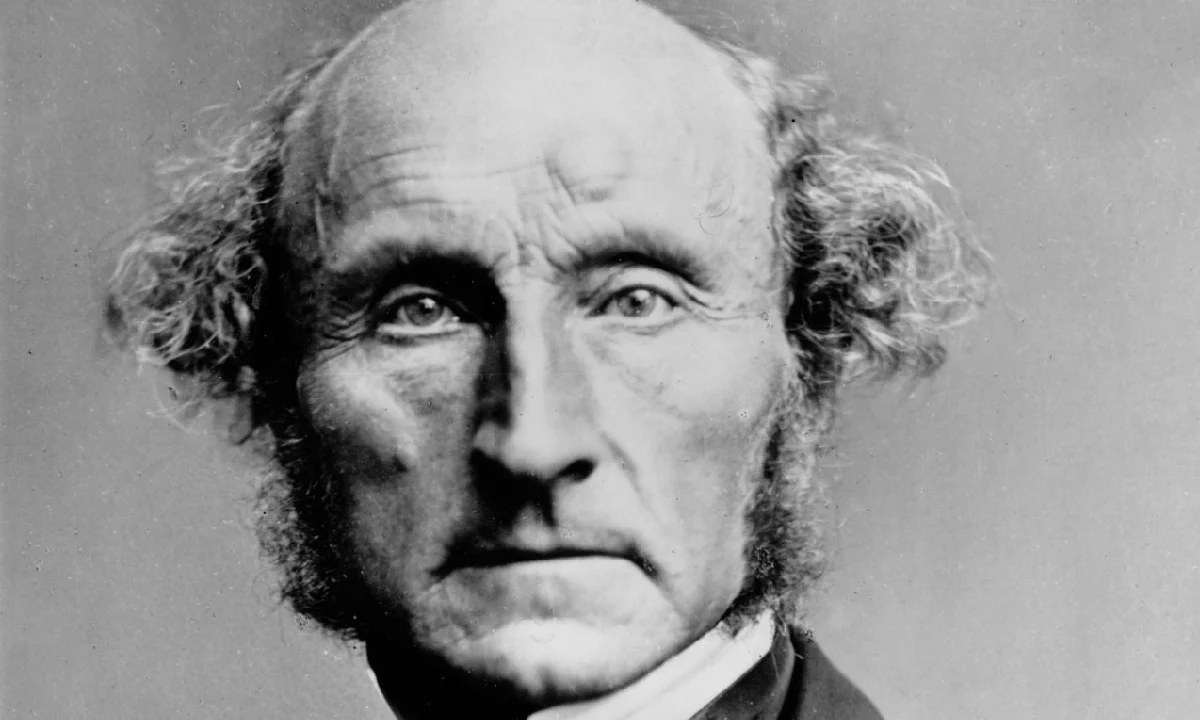
Modern political thought is built on foundations laid down largely in the last 300 years by men like Edmund Burke, Jeremy Bentham, Karl Marx – and for liberals, John Stuart Mill.
In 1859 Mill’s seminal work, ‘On Liberty’ was published. It was the culmination of decades of thought and discussion and it is now recognised that the contribution of his wife, Harriet Taylor Mill was crucial to the endeavour. It is likely that she was responsible for sections of the book, though she died before its publication.
A political philosophy that centres the individual
The core tenet of ‘On Liberty’ is the status of the individual. In a healthy society, she or he should be free to think and act how they wish, as long as they don’t harm others. This philosophy formed the cornerstone of the Liberal Party and its successor the Liberal Democrats. It can be contrasted with Socialism, where the community as a whole is considered more important than the individuals who comprise it, or Conservatism, where stability and tradition are valued ahead of change. Environmentalism prioritises the future health of the planet, which of course should be a precondition underpinning every political philosophy, but liberals believe that the status of the individual should also be a consideration, in line with Mill’s thinking.
Mill argued that “Over himself, over his own body and mind, the individual is sovereign”. This principle applies to thought, to the expression of opinions and to actions and he reasoned, if it is undermined, all of society suffers, because without freedom of thought, knowledge and innovation is stifled.
Argument fortifies truth
Mill believed that when people accept opinions without challenging them, life becomes sterile and our moral faculties deteriorate. He also believed that the only legitimate justification for exercising power over an individual against their will, should be to prevent harm to others.
Mill theorised that truth only becomes evident and accepted when it is subjected to analysis and debate. Human minds are flawed so the ideas they espouse should be tested by opposing arguments. By this process, the most convincing and solid result is arrived at. Intolerance and censorship interferes with this process and allows feeble and unproven theories to succeed. This is particularly important in politics which is not a scientific or mathematical discipline. Without debate, society becomes petrified and we are increasingly ruled by dead dogmas.
As for individual rights, Mill adopted a utilitarian approach, which maximises overall happiness in a secure, free society. Where rights conflict, personal liberty should be prioritised and only actions that cause tangible harm should be regulated. This framework generally favours maximum freedom and liberty for the individual and requires a high burden of proof that a specific action causes harm, before steps are taken to prohibit it.
Broken by dogma
Which brings us to the current party stalemate on the conflict between women’s rights (together with those of children, gays and lesbians) and the rights of trans identifying men, who are sometimes known as transwomen. This is a relatively recent divide, but one that is hard fought and where compromise appears impossible.
On the one side, supporters of trans ideology believe in the concept of a gendered soul – that the brain is independent of its physical surroundings and it is possible to be ‘born in the wrong body’ – a quasi-religious belief that cannot be challenged. This incongruity is addressed by the use of drugs and surgical procedures that are intended to remodel the body until it matches the belief. Understandably this is controversial.
On the other side, sex realists, or those who are ‘gender critical’ consider the gendered soul concept to be flawed and refuse to concede that it is possible for anyone to be born with the wrong brain, or body. Furthermore, they claim that accepting that men can be women, or women can be men, has profound implications for the existence of sex at all, particularly from the perspective of women, who have statutory rights to spaces that exclude men. If sex differentiation is meaningless, a foundation of society as we know it, ceases to exist.
Establishing whether these conflicting ideologies can coexist, and if they can, how to accommodate them, is a problem that now affects all societies and the institutions that operate within them, including political parties.
Is Mill relevant to today’s Liberal Democrats?
This is where the Liberal Democrats have failed the Mill test. For the last decade the party has been influenced by transgender activists who have reshaped policy, and undermined women’s rights, largely under the radar. When a pushback began, five years ago, the party establishment responded by adopting the Stonewall, ‘no debate’ position. Zoe Hollowood’s article about ‘authoritarian progressivism’ explains how this ‘new normal’ has been operating.
We have reached a position where today’s party no longer accepts that conflicting views should be tested in open debate and even refuses to accept that giving a free pass to men in all circumstances, might breach Mill’s harm principle.
Why else would they consistently deny a platform to members who wish to simply persuade the party to adopt a process for internal elections that adheres to the law? Why vote to ‘move to next business’ instead of listening to the arguments?
Why did the party deny a conference stall to a bona fide women’s group for years, until a solicitor’s letter forced the Federal Board to concede that the ban was illegal?
When Mill wrote that ideas should be tested by exposing them to opposing arguments, he might not have anticipated that a party that was founded on his values would turn around and trash them. Are the modern Liberal Democrats still liberal in the tradition of Mill? I don’t think they are and I think Mill would agree with me.