Write for us!
Party strategy

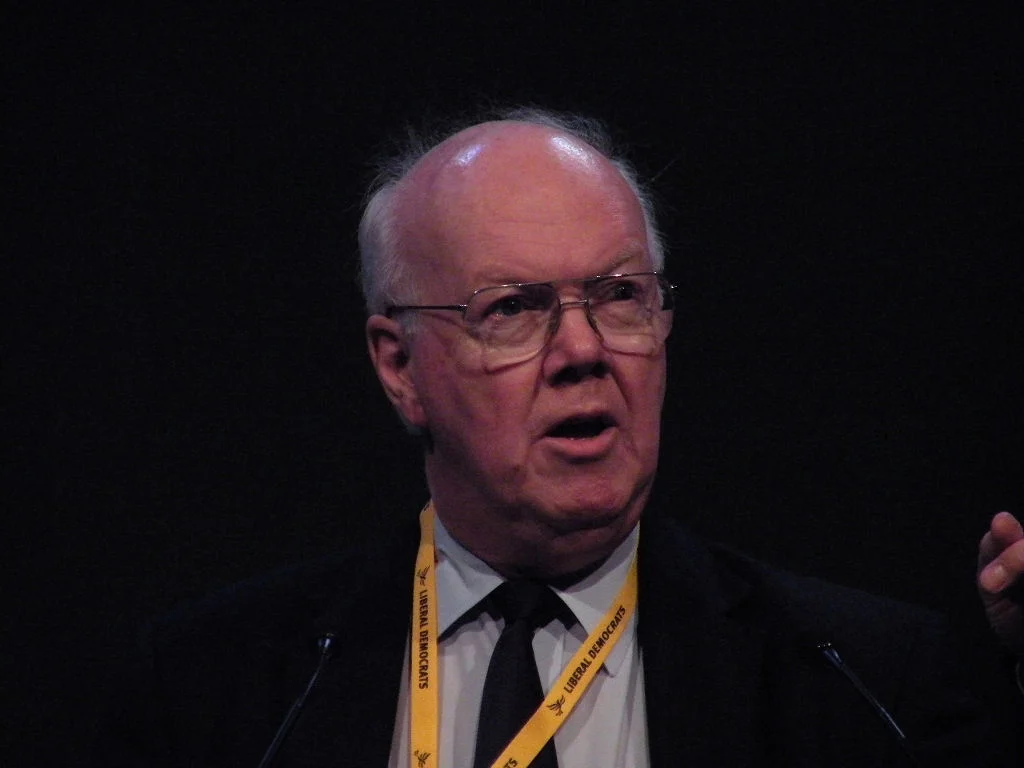
Michael Meadowcroft, 6 March 1942–1 June 2026, Liberal MP and Political Philosopher

·
·
If Jo Grimond’s logic, clarity and calm rhetoric drew me to liberalism, Michael Meadowcroft’s understanding of the philosophy underpinning it, confirmed my place in the party. In the 1980s I moved to Battersea and with some difficulty managed to locate and join a moribund local Liberal Party – but that’s another story. The activities of Margaret Thatcher had made whinging from an armchair, or complaining to friends in the pub, insufficient and I needed to rekindle my political flame. Battersea is close to central London, so the next step was to join a Michael Meadowcroft initiative he had set up…

Proportional Representation Is Back on the Agenda but Which Kind?
·
·
When arguing for proportional representation in a country where voters have become used to first past the post, we hit the problem that voters expect their MP to be a good constituency MP, that is a kind of social worker who will sort out their problems if they’re unfairly treated by the state. Proportional representation can’t happen when you have seats returning one representative. Hence, under proportional representation, voters don’t get a single representative dependent exclusively on their votes – except with Additional Member Proportional, the system used in London and Scotland, they can. In London, the Assembly has 25…

The Electorate Fragments. What Does This Mean for the LibDems?
·
·
There has been some soul searching in the party based on recent results. Before getting into that it is clear the electorate has fragmented, and in such a multi-party model the ceiling any party can reach will be lower than before. And the floor will also be lower as alternatives exist. Therefore, as a party, our expectations need to shift. Are our core values persuasive? But it feels like our party has no distinctive vision for change in the country. Our values include: Equality, Democracy, Community, Human Rights, Internationalism, Environmentalism. Many of those can be seen as the status quo,…
Another Referendum?
·
·
The problem of asking people what they want in a referendum is that after the event, those happy with the result declare that the matter now settled and those who do not like the result then want another referendum at a later date. The problem for the Liberal Democrats is the party has held both views at the same time, following the Scottish Independence referendum and then the Brexit vote. In Scotland, the Party was happy with the result after the Independence Referendum, as the party campaigned strongly against independence, although it was estimated that 40% of Liberal Democrat voters…
When Will the Party Give the Electorate a Reason to Vote for Us?
·
·
Before the party gets too self-congratulatory (i.e. ‘eight years of gains’), a reminder. In the 48 years since the start of the Thatcher era there have been only eight in which the estimated national vote of the LibDems in local council elections has been lower than in 2026 (and that is if we accept the upper estimate of 16% rather than the lower one, 14%, in which case the number of years is four). Two of those years were 1979 (14%) and 1980 (13%). The worst run was between 2012 and 2016 when the estimated proportions of the national polls…
Illiberalism in Defence of Liberalism
·
·
There is a long-standing mutual wariness between the Liberal Democrats and the continuing Liberal Party that anyone who has spent time around either organisation will recognise. What is perhaps surprising is that the sense of grievance seems, on balance, to run more strongly from the Liberal Democrat side than the other way around. This has sometimes led to accusations which, examined in the cold light of day, don’t quite survive reasonable scrutiny. They also seem to focus on one side’s behaviour rather than understanding that it is a two-way street. It would be churlish, in the first instance, not to…

The Nuclear Deterrent and Reality in the UK Political Scene
·
·
The United Kingdom’s nuclear deterrent sits at the centre of a sharpening political debate. As billions are committed to renewing the Trident programme and deepening NATO nuclear cooperation, fundamental questions are being asked about strategic independence from the United States, about the true cost to Britain’s defence budget, about the burden the deterrent places on Royal Navy strategy, and about what each major party actually believes. This article surveys the landscape: the current programme, its fiscal and naval consequences, and where Labour, the Conservatives, the Liberal Democrats, and the Greens stand. The UK Nuclear Deterrent Today Britain’s deterrent rests on…
Returning Fallibilism to the Forefront of Liberalism – The Importance of Maintaining Clear Philosophical Foundations
·
·
Across Western democracies, political debate is becoming more polarised and more fragile at the same time. Many voters feel that ideas cannot be discussed openly, while political parties increasingly struggle to explain what they actually stand for beyond individual policies. When parties lose the ability to articulate their philosophical foundations, politics becomes reactive rather than principled. It’s all very nice and easy to ask voters to vote tactically against people they dislike. That will always be part of politics. Getting voters to vote for your policies, even if for different reasons, can work too. Or parties can make pragmatic compromises.…
Has the Party Become Too Libertarian for Its Own Good?
·
·
Our membership and, in particular, our activists, are overwhelmingly middle-class men. Quite what the ratio is between men and women is unclear because the Party no longer collects data on the sex of members, but apparently the ratio in the Lib Dems is worse even than in the Reform Party. Is this impacting on our policies and Party culture? Are we steadily approving policies, at our regular state Party and federal Conferences, that might well suit a lot of men, but are a disaster for women and girls? Sex work is a questionable freedom Take our policy on prostitution, for…

John Stuart Mill – Do His Values Still Matter to Liberal Democrats?
·
·
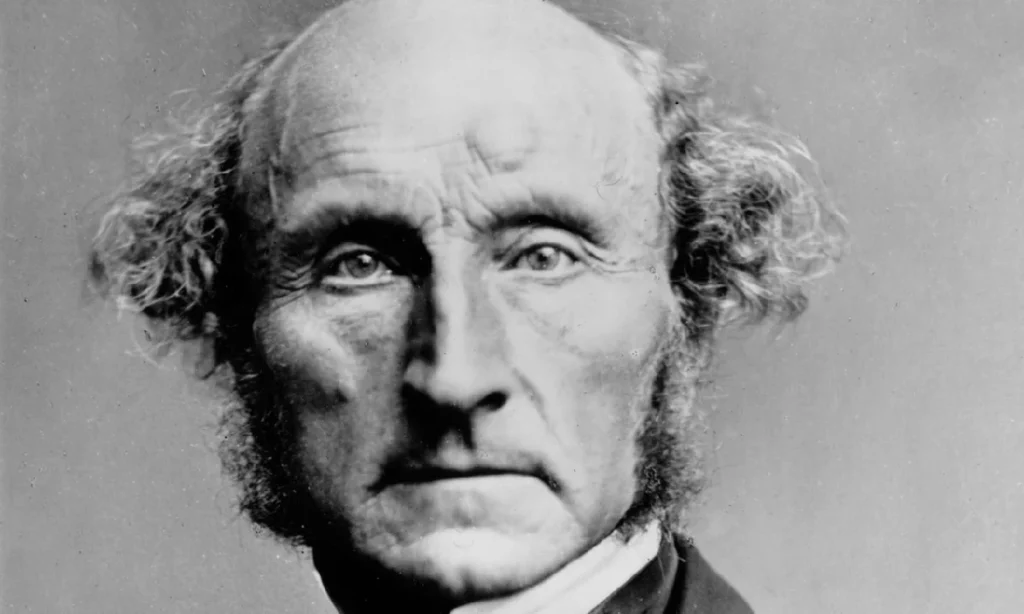
Modern political thought is built on foundations laid down largely in the last 300 years by men like Edmund Burke, Jeremy Bentham, Karl Marx – and for liberals, John Stuart Mill. In 1859 Mill’s seminal work, ‘On Liberty’ was published. It was the culmination of decades of thought and discussion and it is now recognised that the contribution of his wife, Harriet Taylor Mill was crucial to the endeavour. It is likely that she was responsible for sections of the book, though she died before its publication. A political philosophy that centres the individual The core tenet of ‘On Liberty’…
Have the LibDems Been Captured by “Authoritarian Progressivism”?
·
·
In the Lib Dems’ 35 year history, the ideological divisions that have emerged in the party have always, predictably, been along left-right economic fault lines, with Orange Bookers on the right and social democrats on the left. Meanwhile, social issues have been largely understood to be matters of conscience. The thread that knitted individuals together as a party was liberalism – a fundamental commitment to individual freedom tempered by an imperative to avoid harm.

The LibDems in 2026 – A Progressive Force or a Forgotten Postscript?
·
·
Strange times indeed. The Labour government is imploding with a leader who looks like a dead man walking and recent (January 23rd Politico Poll of Polls) support at 18%. The Conservatives are directionless and leaking influential members, with support equal to Labour at 18%. Reform is out in front on 29%, while the Greens and LibDems are on 14% and 13%, respectively.