Write for us!
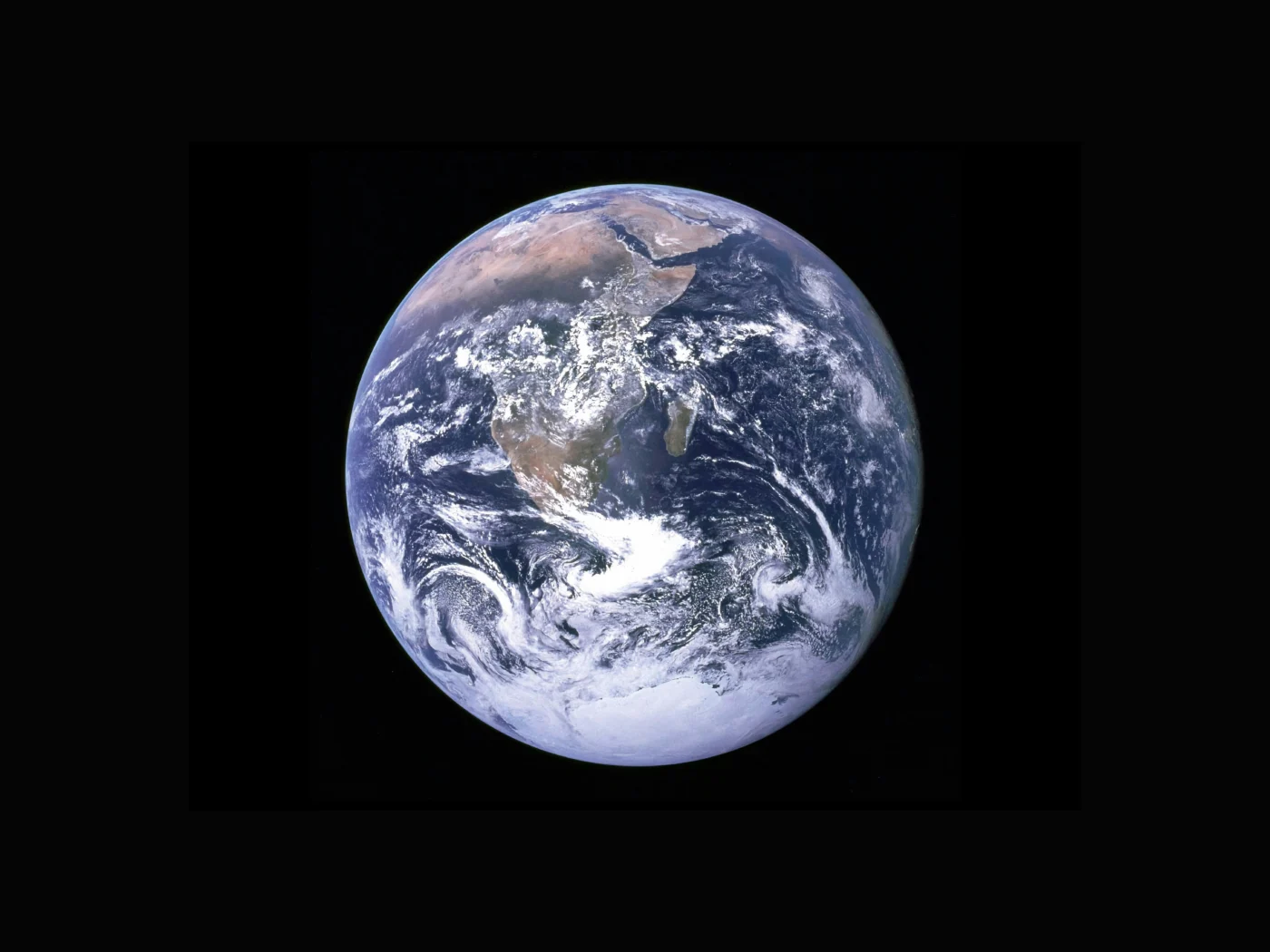
In 1964, the Labour Party manifesto declared an aspiration for a single world government
Labour always regarded the cold war strategies as a second best, forced on us by Russia’s obstinacy and remained faithful to its long-term belief in the establishment of east-west co-operation as the basis for a strengthened United Nations developing towards world government.
World Government is not a mainstream idea in UK politics – and I can’t imagine today’s Labour Party going there. But within liberal and progressive circles, there’s some sympathy for the concept, presumably motivated by that liberal sense of internationalism and a desire to move towards peace and cooperation. Most recently, a Lib Dem members’ group, the Jenkinsite Policy Network, has included World Government as a long-term objective in its draft Statement of Intent, saying “while it is a utopian notion, it is no less admirable because of it.”
This article is a response to those occasional suggestions, because I’d argue the opposite. Far from being a utopian noble ideal, a single world government would be one of the most dangerous political arrangements humanity could create. Let me explain why.
Authoritarianism
Today, we live in a world containing many governments. Some are democratic, others authoritarian. Some respect human rights, others jail dissidents, suppress the press and persecute minorities. But imagine if someone like Vladimir Putin were to end up controlling a World Government. Or imagine a world government that gradually drifted into dictatorship.
Today, if one country descends into tyranny, there remain other countries that provide refuge, alternative ideas and proof that another way is possible. Democratic nations exert diplomatic pressure, offer asylum, provide uncensored information and demonstrate that freedom has not disappeared everywhere. The existence of multiple sovereign states provides a vital counterbalance against authoritarianism.
Under a single World Government, that safety net disappears. If the world’s only government became oppressive, there would be nowhere to escape to. Humanity would effectively have no political “backup system”. We would have concentrated all political power into a single institution and would simply have to hope that institution never failed. That alone should give pause for thought to anyone attracted to the idea.
Competition
But there is a broader liberal principle at stake: competition. Liberals generally recognise that markets produce prosperity because competition drives innovation. Different businesses try different ideas. Most new ideas fail. Some succeed spectacularly. Other companies observe those successes, imitate them, improve upon them and sometimes surpass them. We all benefit from this continuous process of experimentation and learning.
This principle applies just as much to governments, because countries also compete. They compete economically, politically and socially. Governments try different approaches to taxation, education, healthcare, welfare, housing, policing and regulation. Sometimes those new approaches fail. Sometimes they succeed. Other countries observe the results and adapt accordingly. And guess what… Liberals invoke this principle all the time. We point to countries with better educational outcomes, more affordable housing, lower rail fares, stronger local government or better healthcare and ask why Britain cannot learn from them.
Examples
History is full of examples of this process. To take a couple of cases: New Zealand pioneered an inflation-targeting framework in the late 1980s, which was subsequently adopted, in modified form, by numerous central banks around the world. Meanwhile the Scandinavian countries have long influenced reform elsewhere on childcare, parental leave and prison rehabilitation. And the spread of independent central banks, freedom of information laws and ombudsmen all occurred because countries observed successful approaches elsewhere and copied them.
Even democracy itself spread largely through this process. Constitutional government did not emerge simultaneously across the globe. Rather, some countries watched others prosper under more representative constitutions, saw that the idea of peaceful transfer of power really was possible, and as a result gradually adopted similar reforms themselves. Liberal democracy came into being through example, imitation and adaptation.
A single World Government would at a stroke remove most of that competitive experimentation
Of course there would still be variation between provinces, states or local authorities, but only within whatever powers the central government chooses to devolve. Any policy area reserved to the world level, whether immigration, taxation, environmental policy, criminal justice or economic regulation, would no longer benefit from independent experimentation by different nations pursuing alternative solutions. That loss would stifle the future evolution of our political and economic systems.
Diversity
It doesn’t end there. There is another liberal value that a World Government would diminish: diversity. We often celebrate cultural diversity, yet political diversity matters too. Different societies legitimately reach different conclusions about the balance between liberty and security, centralisation and localism, public and private provision, secularism and religious influence, or the pace of social change. Even among stable liberal democracies there are substantial differences in how societies choose to organise themselves.
That diversity is valuable precisely because no one possesses perfect political wisdom. Different countries can pursue different paths, allowing experience to reveal which kinds of institutions work well and which don’t. But a single world government would inevitably impose greater uniformity. However democratic its intentions, one set of political institutions would shape the lives people from Africa to the Middle East to Asia to Europe to America. And that raises another problem: How could a single democratic government genuinely represent all of humanity?
Europe alone contains enormous differences of language, culture and history. Now compare Europe with sub-Saharan Africa, the Middle East, Latin America, India or East Asia. Quite simply, people living in rural Kenya, central London, northern Japan, southern India, or the Amazon rainforest do not merely face different policy priorities, they also possess profoundly different histories, traditions and understandings of what good government – and indeed, what a reasonable society and culture looks like.
Local experiences inform types of governance
I suspect that most western liberals, when they idealistically imagine a world government, imagine something in the European mould that reflects typical Western European understandings of how society should be organised. The problem is that those understandings are not global, but are a product of European historical developments.
For example, in much of Africa and the Middle East, there tends to be a much greater emphasis on extended families, rather than individuals, as a unit of identity and social organization. Similarly, religion in many parts of the World has a more central role in public identity and moral reasoning than is the case in much of Western Europe. How can one single set of institutions meaningfully represent the values of all those different societies, without ending up unintentionally imposing values that are taken from one particular culture?
Representative democracy depends upon citizens feeling that the institutions governing them are, in some meaningful sense, their institutions, and people are not going to feel that unless their institutions have evolved in a way that is compatible with their ways of life and moral values. A single world government with world-wide institutions would – certainly in today’s World – simply not be able to fulfil that.
Cooperation between sovereign nations is better
Of course, none of this is an argument against internationalism per se. It’s just that internationalism is – I would argue – better advanced through international cooperation between sovereign nations. Dealing with challenges such as climate change, pandemics, organised crime, financial stability and various military conflicts all require countries to work together, and international institutions such as the UN have an essential role to play. But cooperation is not the same thing as centralisation. A world in which sovereign democracies collaborate through treaties and international organisations preserves the enormous advantages of political diversity, competition and mutual learning, while still enabling joint action where necessary. That seems to me a far healthier balance than concentrating ultimate political authority in a single global state.
The liberal instinct should be to disperse power, not to accumulate it. After all, liberals have long argued that power is safest when it is devolved, challenged and open to scrutiny. This principle applies not only within countries, through the separation of powers, but also between countries. A world government, by contrast, would represent the greatest concentration of political power in human history. That is something we should be very wary of.