Write for us!
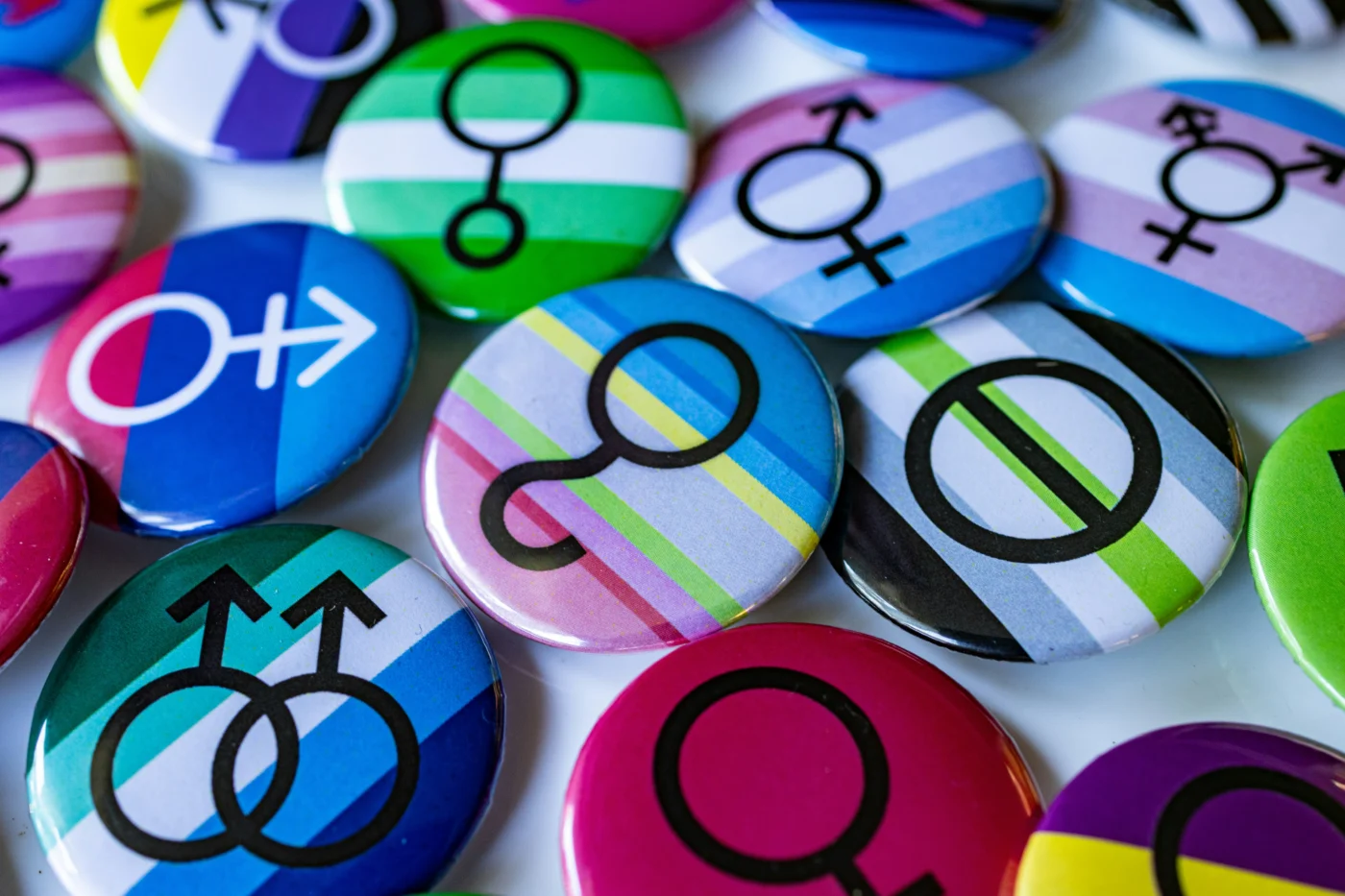
So given the recent article “Identity is a human right” (Liberal Voices – George Cooper – 24 June) – I thought I would put my thoughts down on the sex and gender debate here. In this case from what I have called myself Phronetic Liberalism. Liberalism is an influence, but so are some other philosophical strands – from Ancient Greece and Rome, Mills Utilitarianism and William James Pragmatism.
My starting point is that any conclusions must consider the practical outcomes for businesses and people in real life. This reflects the influence of Pragmatism in my framework. From this starting point, I conclude that there should be two sexes and two umbrella genders.
The implications of having two sexes and multiple genders
For example, toilets have long been split into two categories. This means we inevitably have to classify people into two groupings. Allowing any person to use either set of toilets would defeat the purpose of having separate facilities in the first place.
If we are to have two groupings for sex and two for gender, I apply the logic of the law of the excluded middle: there is one group (A), and then the other group (not A).
It is important to clarify what I mean by “umbrella gender”. I accept that gender exists on a spectrum and that there are many possible gender identities. However, just as we group ages into categories such as “20–29” or “30–39” for practical and administrative purposes — even though age itself is a spectrum — it is sometimes necessary to group genders together for legal and organisational reasons. The law and public institutions cannot continually adjust to every new gender identity or term. The concept of umbrella genders allows us to respect individual identities while still creating workable categories. Just as a 20-year-old and a 29-year-old fall within the same practical grouping of “being in your 20s”, many different gender identities can reasonably sit under one umbrella.
A similar logic applies to the trans flag, which represents both trans women and trans men. Grouping two distinct identities under one symbol is not offensive — it is a pragmatic way of representing related experiences. My decision to use two umbrella genders follows the same practical reasoning: where real life already organises things into two categories, we need two groupings to make the system work.
Linguistics
The next issue is a linguistic one. Because ultimately – what is the functional purpose of language? It is for the communication of ideas and meaning to someone other than you. For me then with backwards thinking – I will start with determining all the definitions and groupings required. From my perspective I believe 6 definitions are required. There need to be two for sex independent of species; two for sex relating to humans; and two for umbrella genders relating to humans.
But given the fact I am using the law of the excluded middle the following are my definitions:
- θ – of or denoting the sex that can bear offspring or produce eggs, distinguished biologically by the production of gametes (ova) that can be fertilized by gametes of the other sex
- Φ – of or denoting the sex that cannot bear offspring or produce eggs
- Ψ – θ but relating exclusively to humans
- Σ – Φ but relating exclusively to humans
- δ – having a predominantly feminine gender identity
- λ – anyone who fails to meet the definition of δ
Given the current battlefield over language, my choice of funny letters is very much deliberate. But for me it explicitly shows a key issue within this debate. Since 6 terms are required. But how many words are used in this debate generally? Only four:
- Male
- Female
- Man
- Woman
It should be uncontentious to assign Female to θ, and Male to Φ . So once that has been done we now get to:
- Female – of or denoting the sex that can bear offspring or produce eggs, distinguished biologically by the production of gametes (ova) that can be fertilized by gametes of the other sex
- Male – of or denoting the sex that cannot bear offspring or produce eggs
- Ψ – Female but relating exclusively to humans
- Σ – Male but relating exclusively to humans
- δ – having a predominantly feminine gender identity
- λ – anyone who fails to meet the definition of δ
Hence the crux of the issue. There are only two commonly used words left – man and woman – when there are four definitions that require a word associated with them. This is the semantic bottleneck that causes some issues itself.
Defining a woman – can she have a penis?
Therefore, for the term “woman”, it should be applied either to Ψ (human female) or to δ (feminine gender). The same applies in reverse for “man”. I will sidestep the question of age here, since whether these terms should only apply to adults is not central to this debate.
The arguments commonly used on this issue are often weak. One claims that “woman” must mean human female simply because that is how the word has always been used. This is an appeal to tradition. Under English common law, a man could not be convicted of raping his wife — tradition alone does not make something right. Another claims that because most people believe “woman” should mean human female, that must be correct. This is an appeal to popularity. Most societies once accepted slavery, yet that did not make it right.
Assigning the word “woman” to mean human female therefore often rests on reasoning that relies on logical fallacies. This will frustrate some readers, but it is worth examining.
More fundamentally, it is difficult to make a purely logical case for why any particular string of letters must carry one specific definition over another. Language is ultimately a tool for communication. However, people clearly have strong emotional investments in what certain words mean. From a utilitarian perspective, this emotional dimension cannot be ignored. From a Stoic perspective, becoming deeply distressed over the definition of a word is unwise and far from the tranquility that comes from recognising that it is not things themselves that disturb us, but our judgments about them.
If we must choose what “woman” should mean, then utilitarianism offers a practical guide: we should favour the definition that produces the greatest happiness for the greatest number. On that basis, I believe more people would be happier if “woman” referred to Ψ (human female) rather than to δ (feminine gender) — that is, if it tracked sex rather than gender.
This helps explain why some people believe a woman can have a penis while others do not. Both sides have been unhelpful in resolving the confusion. The first step out of this impasse is to popularise clear terms for the two missing definitions and to aim for these six terms to be defined in primary legislation. Neither side has properly acknowledged that six distinct concepts require six distinct words. If “woman” is to be treated as a gender category, then what word should refer specifically to a human female?
There is also a practical consequence for the rule of law. While appeals to tradition are logically weak, legislation still needs to be clear and consistently understood. Allowing the meaning of important words to drift through cultural change, without parliamentary clarification, creates confusion for those expected to follow the law. If different people understand the same word to mean different things, the rule of law is weakened.
For these reasons, I believe Parliament should define certain key terms in legislation, just as it restricts other activities to prevent harm or maximise benefit. Leaving important words to drift in culture is not a neutral or harmless option.
Philosophy and ethics
The other step is to accept that both sex and gender exist as distinct concepts. Biology and social or cultural factors are different, and linking them too tightly risks fixing what people can do and be. From this follows the central question: in what situations does sex take precedence over gender, and in what situations does gender take precedence over sex?
At this stage, all humans can be placed into one of four groups:
- Ψδ – generally known as a cis woman
- Ψλ – generally known as a trans man
- Σδ – generally known as a trans woman
- Σλ – generally known as a cis man
The question of when sex should matter more than gender, or gender more than sex, is contentious and ultimately philosophical. What is the moral and ethical thing to do here?
My own answer is derived primarily from Utilitarianism (with its focus on consequences), Stoicism (with its emphasis on virtue), and Pragmatism. I am notably less influenced by deontology, which underpins a great deal of traditional liberal thought.
Take sport as an example. If a trans woman is competing in women’s sports and retains a physical advantage from male biology, this can undermine fairness and increase the risk of physical harm to other competitors. However, this is not the end of the matter. Utilitarianism asks what produces the greatest overall good for the greatest number of people. If including trans women creates significant happiness for many participants or spectators, then those benefits must also be weighed in the calculation.
For those who disagree with allowing outcomes to be determined purely by majority preference, there are different ways to respond. One common liberal approach is to shift towards deontological ethics — establishing fixed principles or rights to protect minorities or particular groups. I do not lean in this direction. Instead, drawing on Ancient Greek and Roman influences, I place greater weight on virtue ethics.
For Utilitarianism (and liberalism more broadly) to function well, it needs people to possess good character and virtues. My Stoic influences lead me to believe that excessive focus on things outside our control tends to produce poor mental outcomes. From the perspective of practical wisdom, is it virtuous to allow females to face a greater risk of physical harm or unfairness simply because we prioritise protecting others from emotional discomfort that stems from something outside their control?
This is where the question of which virtues we value becomes important. Many people treat empathy as a virtue. I do not. In my view, empathy is a tool rather than a virtue in itself, and an over-reliance on it can distort fair decision-making. This difference in weighting helps explain why people reach different conclusions on these issues.
Empathy
The empathy angle can apply to both sides. To define it first: empathy is the ability to understand and share the feelings of another person. This can be a useful tool, but like any tool it has limits. Drawing on Aristotle’s golden mean – the idea that a virtue lies at the midpoint between excess and deficiency – too much empathy can become a problem when it leads us to favour the feelings of one group over another to an excessive degree.
Too much empathy often leads people to favour in-group members over out-group members. One study by Daniel Batson and colleagues at Kansas University illustrates this. Participants listened to an audiotape about a child with a fatal muscle-paralysing disease. One group was asked to imagine how the child felt and how the illness had affected their life, while the other group was asked to take an objective perspective. Afterwards, participants were asked whether they would move the child to the top of the queue for treatment, ahead of others. Those primed with empathy were significantly more likely to do so – even though this went against fairness and they had not heard from anyone else on the list.
Anything that causes excessive focus on one group over others tends to create tension in a society that aims to be fair, just, and pluralistic. Selective compassion is not virtuous, and utilitarianism does not work by simply ignoring the interests of those outside our immediate circle.
For this reason, I do not support a strongly trans-supportive position based solely on concern for the feelings of trans individuals. Equally, I do not support a gender-critical position based primarily on the emotional discomfort of women regarding shared spaces or sports. My approach is guided instead by practical outcomes, fairness, and reasoned virtue.
This brings us to a deeper question that often sits underneath this debate: what actually makes a position ethical, and why should that ethical system be the one we use to shape policy? Are we being consistent within our chosen ethical framework, or are we working backwards from a preferred outcome and then justifying it after the fact?
If someone is reasoning deontologically, why that particular principle and not another? If they are reasoning consequentially, which outcomes should we aim for and why not others? If they are drawing on virtue ethics, why those virtues and not others? Different societies and different people answer these questions differently, and not all answers produce equally good results in terms of health, happiness, or social cohesion.
Having taken this detour, I now return to the central question: in which situations should sex take precedence over gender, and when should gender take precedence over sex? From both a British liberal perspective and a Phronetic Liberal one, this should be determined by context and circumstances rather than by any fixed rule that one must always override the other.
Sex is biological and cannot be changed. Gender is social and can be changed. Sex relates to biological characteristics, while gender relates to social ones. I will therefore evaluate three key examples: sports, pronouns, and changing rooms.
Sports
Starting with sports then – it is worth first asking why we don’t simply have one open category that everyone competes in, regardless of age, sex, or gender.
The main justification for splitting categories on the basis of sex comes from biology. In boxing, for example, physical harm is always a possibility, but the probability and severity of that harm increases significantly when there is a large difference in strength and power.
There is also the question of competitive fairness. Conventionally supervised sports already ban the use of performance-enhancing substances because they undermine fairness between competitors. In the same way, alterations to the body through male puberty can create lasting physical advantages that are difficult to remove.
There is therefore a strong, science-based case for maintaining separate male and female categories in many sports.
The main counterargument is that competing in the “wrong” category can cause significant mental harm to trans athletes. This is a real form of harm and should not be dismissed. From a utilitarian perspective, this creates a conflict between the risk of physical harm (and unfairness) on one side, and mental harm on the other.
On the question of fairness, however, it is worth noting that biology already creates many natural differences between competitors — differences in height, limb length, lung capacity, and so on. If we accepted that any biological advantage makes competition unfair, we would struggle to justify almost any competitive category. The key distinction in this debate is usually whether the advantage comes from going through male puberty, rather than from natural variation within a sex.
My conclusion is context-dependent rather than absolute. I am largely anti-deontological on this issue. At amateur level, I believe individual liberty should carry significant weight, and people should generally be trusted to make their own choices about which category to compete in. At the highest levels of sport, however, the balance shifts. On balance, elite categories should remain separated by sex, due to both the increased risk of physical harm and the importance of competitive fairness. It is also worth acknowledging that non-trans competitors can experience mental harm and frustration when they feel the competition has been made unfair.
Pronouns
To move onto pronouns then – is this biological or social? For me this is clearly social. Everyone, trans or not, has pronouns they would prefer others to use about them. Therefore, for me, it is a matter of common courtesy to base pronoun usage on someone’s umbrella gender.
That said, I am not saying pronouns should be based on sex. But given I only recognise two umbrella genders, I only recognise two default sets of pronouns – he/him and she/her. However, unlike toilets, there is no strong necessity to restrict this to only two options. They/them pronouns are valid, and if someone requests them, they should be respected – or at the very least, not intentionally ignored.
From this I will now set out my stance on speech more generally. I divide speech into four categories:
- Ordinary speech – normal, everyday conversation.
- Rude speech – speech that is rude, insulting, or contains swearing or name-calling.
- Consequence speech – speech that is serious enough to warrant a real consequence, such as being fired, ending a relationship, or ending a friendship.
- Unlawful speech – speech that is serious enough for the authorities to intervene, such as incitement to violence.
Drawing on the concept of the reasonable person in British law, and also from Stoicism’s distinction between what is and is not in our control, I do not accept that words are violence or that misgendering should be unlawful. Both ideas are unreasonable, and they risk increasing mental fragility rather than reducing it. While I accept that hurtful words can cause hurt, the solution is not to restrict freedom of speech or to rely on the courts to police it. The better approach is to encourage people to develop enough mental resilience and virtue to handle speech that is outside their control.
At the same time, misgendering should not fall under ordinary speech. It is reasonable to describe being intentionally misgendered as rude – a form of insult that can be annoying or hurtful. Just because people should build greater mental resilience does not mean others get a free pass to insult them. That would not be virtuous, nor would it be consistent with a utilitarian concern for overall wellbeing.
This leaves misgendering in the category of rude speech or, in more serious or repeated cases, consequence speech. Just as with other forms of rudeness or insult, the severity depends on context and circumstances. I would leave it to individuals and organisations to judge when it crosses the line into something that warrants a personal or professional consequence.
Changing rooms
This one isn’t an easy answer to jump to compared to the previous pair. It’s not like a competitive advantage exists due to biology, nor is it tied to specific gender identities easily either. Yet it can be considered social to some extent, and biological depending on facilities.
One argument that has to be considered is the physical risk of harm to human females from allowing human males into the same changing room. But to make one thing clear here, I do try to minimise deductive reasoning and use inductive reasoning where possible as the conclusions are much stronger. Theoretical risk isn’t sufficient. The risk must be drawn from real world events where a trans woman has harmed a woman.
And quite simply if one is to follow the evidence on physical harm – I know of maybe two examples. That is not enough to justify the conclusion that trans women shouldn’t be in female changing rooms because of a theoretical risk not backed up by data right now. Conclusions need to be drawn from evidence, and tested against evidence without emotional investment towards desiring a specific result.
That is not to say that a safeguard should be put in place. Because until now I have not touched the topic of self-ID for gender. And for me ultimately given gender is social, it has to be affirmed socially by others. And for pragmatic policy making you should not just be able to flip back and forth at will when it benefits you. It is human nature that some will try to exploit any system for their own gain. Therefore, for both human females and trans people – neither should want people exploiting the system creating harm for women or a public backlash against true trans people. As a result, parliament does need to make sure there is a fair system in place for changing ones gender (not sex) that is well developed and thought out.
The next thing to consider is the visibility of certain body parts that people want to control who can see and when. It is true that reactions to the exposure of body parts are shaped by social norms and personal beliefs, not by biology alone. The underlying reason behind differing levels of comfort with exposure in different contexts boils down to emotional reactions and beliefs that are social in nature.
A consistent approach, grounded in practical wisdom, requires applying similar standards when weighing discomfort that arises from social beliefs and conditioning. Trans people may experience distress from being misgendered because of how it makes them feel, and this reaction is shaped by social beliefs. Just as others may experience real discomfort from exposure in public changing rooms. If we accept that reactions rooted in social beliefs are not automatically decisive in one domain, the same principle of evaluation should apply elsewhere.
I am not here to determine my own conclusions based purely on why others currently hold their positions. And from a Utilitarian angle, if there is no solution that will make everyone happy – then the next best is the one that will make the greatest number happy. While some discomfort is self-caused, and a Stoic approach would encourage building resilience on all sides, the discomfort experienced by females in this setting is widespread and tied to a context involving strangers and undress. On balance, this tips the utilitarian calculation toward sex-based changing rooms rather than gender-based ones.
Conclusion
While I have generally reached what would be described as gender-critical conclusions on the practical questions, I have been just as critical of the reasoning used to support those positions as I have of some arguments from the transgender camp. My aim throughout has been to apply a consistent approach — one that prioritises evidence, practical outcomes, and clear thinking — rather than simply defending one side or the other.