Write for us!
Political debate

Lost in Translation: The Art of the Misquote

·
·
Few things are more confidently delivered, or more frequently wrong, than a famous quotation. We misquote for all sorts of reasons – faulty memory, wishful thinking, political convenience, or simple repetition of someone else’s error. But the misquote is rarely innocent. More often than not, the distortion tells us something interesting about the distorter. “Elementary, my dear Watson” Sherlock Holmes never said it. Not once across all of Arthur Conan Doyle’s stories. Holmes does say “elementary” in some stories, and obviously in the stories he does address Watson, but never together in that form. The phrase was cemented through stage…
Sex and Gender – an Extended Essay
·
·
So given the recent article “Identity is a human right” (Liberal Voices – George Cooper – 24 June) – I thought I would put my thoughts down on the sex and gender debate here. In this case from what I have called myself Phronetic Liberalism. Liberalism is an influence, but so are some other philosophical strands – from Ancient Greece and Rome, Mills Utilitarianism and William James Pragmatism. My starting point is that any conclusions must consider the practical outcomes for businesses and people in real life. This reflects the influence of Pragmatism in my framework. From this starting point,…

Why I No Longer Wear a Poppy
·
·
My father served in the RAF, reaching Senior Warrant Officer level. My brother gave thirty years leaving with the rank of NCO. Between them, they accumulated almost half a century of service to this country. When they needed support in later life, they left with navigating the casework systems of SSAFA and the Royal British Legion, filling in forms, waiting for assessments, proving their need to charity volunteers. This is what the military covenant looks like in practice, for most of those who actually served. I no longer wear a poppy. I want to explain why, because the decision is…
Thoughts From the Woods
·
·
I live near a beautiful park. When the weather permits, I put on my shoes and run up along a path through the trees, and turn left onto the track that winds through the recently planted Foresters’ Memorial Wood. It’s a lovely spot. The Foresters were people from Commonwealth countries who answered the call during the Second World War to cross an ocean and help Britain and the Allies in the struggle against the Nazis. Everyone did what they could We needed them. With so many able-bodied men sent away to fight there was a requirement for labour in the forests…
Breaking the Silence: Liberalism or Orthodoxy in the Lib Dem Gender Debate?
·
·
In February 2025, Liberal Voice for Women settled its legal case with the Liberal Democrats, securing equal treatment for members who believe that biological sex is real and matters – often described as “gender critical” or “sex-realist” views. The settlement meant that we could finally book conference stands, organise fringe meetings, and in theory, participate in party life on the same basis as other members. Rather than improving our legitimacy though, this led to a simmering resentment amongst radical trans activists in the party who said we had “legally forced” the party to acquiesce to our requests. This was deemed…
Double Standards Make Bad Law
·
·
This is an examination of Nigel Farage’s incendiary rhetoric, the law of incitement and why establishment figures bleating about “two-tier justice” may be both its greatest beneficiaries and biggest hypocrites. The Phrase that preceded a riot On 2 June 2026, Nigel Farage, a millionaire former public schoolboy and establishment insider, now Reform UK leader, and Member of Parliament for Clacton, posted a video to social media calling on the British public to respond to the death of Henry Nowak with “pure cold rage.” Within hours, hundreds of people rioted in Southampton. Riot police were pelted with bricks, rocks, flares and chairs. Eleven…

Liberal Democrats – It’s Time to Campaign for What We Believe In – Amend the Equality Act and Remove Sex as a Protected Characteristic
·
·
Editor’s note: This article was submitted anonymously. George Cooper is a pseudonym. He informed me that the article was previously submitted to another Liberal Democrat supporting website but he was told that it would not be published if he did not reveal his name. He is unable to do this. After reading the article, I decided to publish it in the interest of open debate. At Liberal Voices we aim to showcase all strands of opinion in the party. It could be argued that the views in the article are close to reductio ad absurdum. That is for you to…

Liberal Democrats Need to Stop Their Obsession With ‘Trans Rights’
·
·
I’m a middle-aged man and I have a confession. I’d really like to be younger. And I feel young too. I’m very active. I exercise regularly – at levels that very few older people do. I’m in the small minority of middle-aged men in the UK who isn’t overweight. Go me! Now suppose I decided on those grounds that I will henceforth self-identify as a teenager, and on that basis I demanded access to youth clubs, a place on LibDem quotas reserved for young people, and so on? And suppose I also demanded that everyone should be obliged to treat…

The case of May 2026: Oil and Gas Exploration vs. Climate Change Mitigation
·
·
Most people are well-aware of Reform UK’s energy policy, which is to put it bluntly, drill-baby-drill. The public may be less aware of the Conservative Party’s slide in recent years, from following the general consensus on net zero to being the voice of fossil fuel lobbyists. Kemi Badenoch and her ministers regularly appear on broadcasting media promoting the maxxing out of North Sea oil licences. The reality of climate change and the need for mitigations is rarely mentioned in these presentations. In fact, the Conservatives have received significant donations from oil and gas investors, and in January 2025 were in…

Clarity: Not Erasure
·
·
What has actually happened The Supreme Court did not remove rights from trans people. It clarified which legal characteristic protects which interest. The Equality Act 2010 contains nine protected characteristics. Two of them are relevant here: sex and gender reassignment. For years, ambiguity existed about how these interacted – particularly whether a trans woman (i.e. a man) with a Gender Recognition Certificate should be treated as a woman for every purpose under the Act, including access to single-sex services. The Supreme Court, unanimously, said no: for the purposes of the Act, “sex” means biological sex. A GRC does not alter that…
It’s Complicated and Superficial Knowledge Doesn’t Help
·
·
Any serious discussion of the Israeli Palestinian conflict risks becoming incomplete when it treats the Palestinian Nakba as the only refugee tragedy born from the collapse of the British Mandate and the wars that followed. The suffering of Palestinian Arabs in 1948 was profound and historically significant. Hundreds of thousands were displaced during a brutal conflict whose consequences remain unresolved today. But modern discussion often overlooks an equally consequential human tragedy: the destruction of ancient Jewish communities across the Arab and wider Middle Eastern world. Tragedies affected both communities Between roughly 800,000 and 1,000,000 Jews fled, were expelled, or were…

Thought‑Terminating Clichés Are the New Normal
·
·
Over the past week I have spent some time on Blue Sky. Partly because this is where a lot of Lib Dem MPs are now posting and I wanted to read their reactions to the EHRC guidance (in summary they have been largely silent except for the Women and Equalities spokesperson who condemned it as a huge step back for human rights – which I disagree with). However, I ended up in several conversations with trans activists on the app who are making the same kind of arguments that failed on Twitter (X) three years ago. One of the key…
Where Are All the Women?
·
·
In most political Parties in the UK, men outnumber women, but in the Liberal Democrats the ratio of men to women is particularly bleak, worse even than Reform. Research published in December 2025 makes sobering reading for the Party: 33% of Lib Dem members are female, 39% of Reform members, and women’s membership of other Parties is much higher. Obviously our deputy leader and several of our MPs are women, and our one successful candidate in the Welsh Senedd election is a woman. But this success masks a growing crisis in female involvement in the Party at all levels. The…

Comment Is Free – if You Know Where to Look
·
·
Censorship is central to the mission of LibDemVoice, the long established “independent” party platform. Its moderators guard their single interpretation of the party’s vision with passion. Opinions that question their beliefs and views from members who suffer from independent thought do not sully their website. This has become such a problem that many members no longer read its articles and those who do rarely attempt to respond, because they know that their contributions will end up in the bin. It was John Stuart Mill who famously wrote: “He who knows only his own side of the case knows little of…
The Ballot and the Manipulated: Has Democracy Lost Its Way?
·
·
Other than being friends, Dan and I don’t have much in common on paper. He was born into poverty in Liverpool, left school at sixteen, joined the army, protested nukes at Greenham Common, drove taxis, raised a couple of children alone on next to nothing, and arrived at philosophy and anarchism through sheer intellect led bloody-minded curiosity. He’s precisely the kind of intellect that Stalin would have sent to Siberia. Me on the other hand, I came from a middle-class background that turned out to be as fractured as any – a mother who resented me, an early exit from…
Proportional Representation Is Back on the Agenda but Which Kind?
·
·
When arguing for proportional representation in a country where voters have become used to first past the post, we hit the problem that voters expect their MP to be a good constituency MP, that is a kind of social worker who will sort out their problems if they’re unfairly treated by the state. Proportional representation can’t happen when you have seats returning one representative. Hence, under proportional representation, voters don’t get a single representative dependent exclusively on their votes – except with Additional Member Proportional, the system used in London and Scotland, they can. In London, the Assembly has 25…

Who Gets Heard? Why British Governments Listen to Business — and What It Costs the Rest of Us
·
·
Earlier this month, the government quietly closed one of the more brazen rackets in modern British public life. For years, bots and third-party companies had been bulk-buying driving test slots from the DVSA and reselling them to desperate learner drivers for up to £500 eight times the official price of £62. New rules now mean only the learner themselves can book, change or cancel their test. Simple. Effective. Long overdue. But here’s the question worth sitting with: why did it take so long? This wasn’t a hidden problem. The Driving and Vehicle Standards Agency knew. Ministers knew. The waiting lists…
Another Referendum?
·
·
The problem of asking people what they want in a referendum is that after the event, those happy with the result declare that the matter now settled and those who do not like the result then want another referendum at a later date. The problem for the Liberal Democrats is the party has held both views at the same time, following the Scottish Independence referendum and then the Brexit vote. In Scotland, the Party was happy with the result after the Independence Referendum, as the party campaigned strongly against independence, although it was estimated that 40% of Liberal Democrat voters…
The Scottish Parliament Election
·
·
The recent elections to the Scottish Parliament saw an increase from 4 to 10 Liberal Democrat MSPs at Holyrood, compared to 58 for the SNP, 17 each for Labour and Reform, 15 Greens and 12 Conservatives. Now the sixth largest party in the Scottish Parliament, the Liberal Democrats have fallen from 17 MSPs in the first Parliament in 1999, when they entered a coalition to form the first devolved government with Labour 27 years ago. In the following two elections the Lib Dems only lost one seat. The party has celebrated this recent result as a great success, but what…
The Commissioner Who Lost His Neutrality…
·
·
There is a principle at the heart of British policing so fundamental that it predates the modern democratic state: the constable, whatever their rank, enforces the law impartially and takes no political sides. It is this principle that distinguishes a police service from a political instrument. It is also the principle that Metropolitan Police Commissioner Sir Mark Rowley has, by any honest assessment, repeatedly and seriously compromised. The evidence is not a matter of interpretation. It is a pattern of documented public statements, selective enforcement decisions, and a conspicuous failure to fulfil a clear legal duty, one that sits in…
The Silence They Cannot Buy: Iran, Antisemitism and the Weaponisation of Fear
·
·
Something has gone badly wrong with British political discourse, and the elections on Thursday will be the first formal reckoning with it. Three threads run through the disorder, and they share a single pattern: a political and media establishment using manufactured crises, convenient attributions, and the deliberate conflation of dissent with hatred to avoid accountability for its own failures. The threads are distinct. The logic connecting them is not. The boy who cried wolf (the wolf being Iran) When a seventeen-year-old lad is found with a petrol can after ambulances have been torched, and when a man with evident and…
From Blair’s ‘Tough on Crime/Tough on the Causes of Crime’ to Placing Sticking Plasters Over Gaping Wounds Under Starmer — How Britain’s Shoplifting Crackdown Exposes a Justice System Built to Protect Property Over People, and Power Over Accountability
·
·
On Monday, Prime Minister Keir Starmer stood before the USDAW shop workers’ union and declared an end to the shoplifting “free-for-all.” It was the kind of speech that plays well in a headline cycle: tough, purposeful, protective of honest working people against those who “cheat the system.” The government announced stiffer penalties for shoplifters, 3,000 additional neighbourhood police officers, a £5 million specialist intelligence unit targeting retail crime gangs, and a new standalone offence for assaulting a shop worker. The statistics underpinning the announcement were, at best, modest. According to the Office for National Statistics, shoplifting offences fell from 516,611…
Access Denied: How the Liberal Democrat Leadership is Sidelining Women
·
·
Last week saw another interview with Ed Davey telling a Lib Dem trans activist that he had been listening to trans people in the Party after the Supreme Court ruling on the meaning of woman in the Equality Act. Yet another illustration of the leadership jumping straight to placation mode when something upsets the trans lobby… Part of a pattern The 2022 changes to the unlawful Lib Dem Definition of Transphobia are another case in point. The Party held a special meeting with trans people just prior to amending the Definition. Several were invited to the House of Commons to…

The Road not Taken
·
·
In the autumn of 1986, Margaret Thatcher’s government abolished road service licensing for local bus services outside London (commonly called deregulation). The logic was market orthodoxy: competition would drive down costs, encourage innovation, and serve passengers better than the inefficiencies of public ownership ever had. Almost four decades later, the verdict is in, and it is damning. Bus journeys across England have fallen from 4.6 billion in 2009 to 3.6 billion in 2024. Outside London, bus mileage has collapsed by 29% compared to 2005. In the north of England, the decline is starker still: Transport for the North reports that…
Illiberalism in Defence of Liberalism
·
·
There is a long-standing mutual wariness between the Liberal Democrats and the continuing Liberal Party that anyone who has spent time around either organisation will recognise. What is perhaps surprising is that the sense of grievance seems, on balance, to run more strongly from the Liberal Democrat side than the other way around. This has sometimes led to accusations which, examined in the cold light of day, don’t quite survive reasonable scrutiny. They also seem to focus on one side’s behaviour rather than understanding that it is a two-way street. It would be churlish, in the first instance, not to…

Childhood Is Precious – It’s Time to Tackle Online Harm
·
·
Many people in the Party – especially at the grassroots – are totally unaware of the extreme libertarian approach that has been adopted to a whole range of issues that are most accurately framed as ‘sexual exploitation.’ From pornography to prostitution there has been a laissez-faire attitude and a presumption that somehow these matters are all about individual choice and can even be framed as ‘empowering.’ Of course, the majority of the sexual exploitation in these cases is against women and by men (for example in the UK 88% of people in prostitution are women and buyers are 95% +…

How Not to Make a Magna Carta
·
·
A “New Magna Carta” was one of Ed Davey’s brand-new announcements at his speech to the Spring Conference on Sunday (15 March 2026). Let’s set aside the obvious question of how this has suddenly appeared as a new LibDem policy proposal without any consultation with the membership, and what this means for internal party democracy. After all, few Liberal Democrats would disagree with the principle of a written constitution. And it is certainly consistent with liberal values. But was what Ed was proposing really a good idea? I’m going to say no. It looks to me like he has taken…
The French Revolution and Human Rights – Early Steps Toward Modern Liberalism
·
·
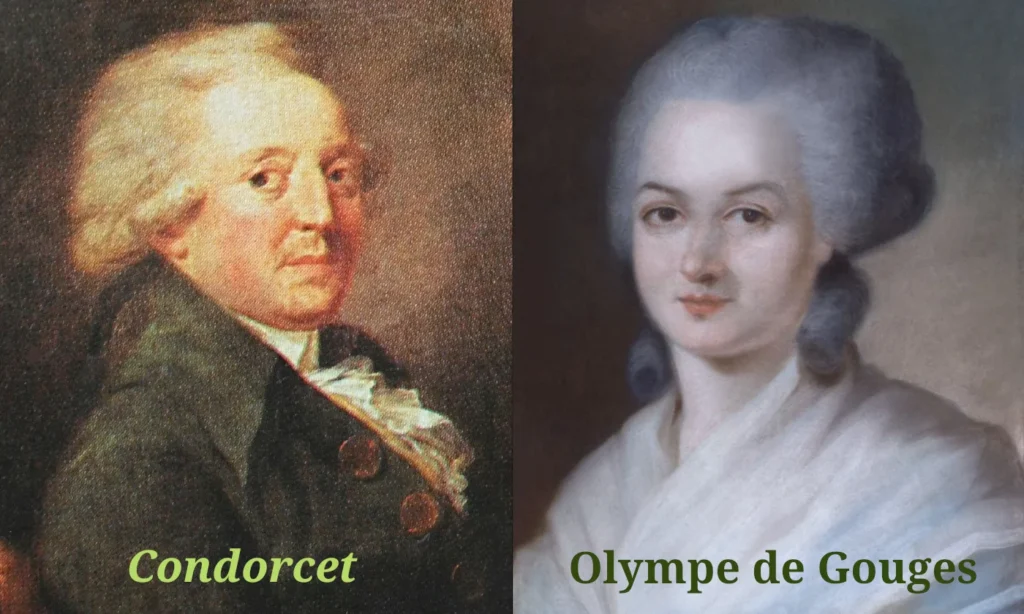
The impression most people have of the French Revolution is a one of sensible moderates who were overcome by the radical extremists of Robespierre who then drowned the Revolution in blood. Jonathan Israel doesn’t dispute that part of the story but places on center stage a group of democratic republicans who briefly gained control of the Revolution and came close to establishing the first true modern democracy – before Robespierre staged the coup that led to them being sent to the guillotine. The Roots of the Revolution in the Radical Enlightenment Johnathan Israel has made the Enlightenment his main specialisation.…