Write for us!
Political centre

Michael Meadowcroft, 6 March 1942–1 June 2026, Liberal MP and Political Philosopher

·
·
If Jo Grimond’s logic, clarity and calm rhetoric drew me to liberalism, Michael Meadowcroft’s understanding of the philosophy underpinning it, confirmed my place in the party. In the 1980s I moved to Battersea and with some difficulty managed to locate and join a moribund local Liberal Party – but that’s another story. The activities of Margaret Thatcher had made whinging from an armchair, or complaining to friends in the pub, insufficient and I needed to rekindle my political flame. Battersea is close to central London, so the next step was to join a Michael Meadowcroft initiative he had set up…

Why Game Theory Is Breaking Britain – but Could Also Save It
·
·
Game Theory examines when and why people choose to cooperate or compete. Its central insight is that our decisions are shaped not only by what we want, but by what we expect others to do. Well known game theory scenarios include the Prisoner’s dilemma, the Cold War, and on a simpler scale, even Rock, Paper, Scissors. An important aspect of Game Theory relates to whether and why we choose to cooperate or compete. Researchers found that the success of either strategy is dependent on how others in the system behave, and that people instinctively know this. Our decision-making routinely includes…
The Electorate Fragments. What Does This Mean for the LibDems?
·
·
There has been some soul searching in the party based on recent results. Before getting into that it is clear the electorate has fragmented, and in such a multi-party model the ceiling any party can reach will be lower than before. And the floor will also be lower as alternatives exist. Therefore, as a party, our expectations need to shift. Are our core values persuasive? But it feels like our party has no distinctive vision for change in the country. Our values include: Equality, Democracy, Community, Human Rights, Internationalism, Environmentalism. Many of those can be seen as the status quo,…
When Will the Party Give the Electorate a Reason to Vote for Us?
·
·
Before the party gets too self-congratulatory (i.e. ‘eight years of gains’), a reminder. In the 48 years since the start of the Thatcher era there have been only eight in which the estimated national vote of the LibDems in local council elections has been lower than in 2026 (and that is if we accept the upper estimate of 16% rather than the lower one, 14%, in which case the number of years is four). Two of those years were 1979 (14%) and 1980 (13%). The worst run was between 2012 and 2016 when the estimated proportions of the national polls…
Illiberalism in Defence of Liberalism
·
·
There is a long-standing mutual wariness between the Liberal Democrats and the continuing Liberal Party that anyone who has spent time around either organisation will recognise. What is perhaps surprising is that the sense of grievance seems, on balance, to run more strongly from the Liberal Democrat side than the other way around. This has sometimes led to accusations which, examined in the cold light of day, don’t quite survive reasonable scrutiny. They also seem to focus on one side’s behaviour rather than understanding that it is a two-way street. It would be churlish, in the first instance, not to…

The French Revolution and Human Rights – Early Steps Toward Modern Liberalism
·
·
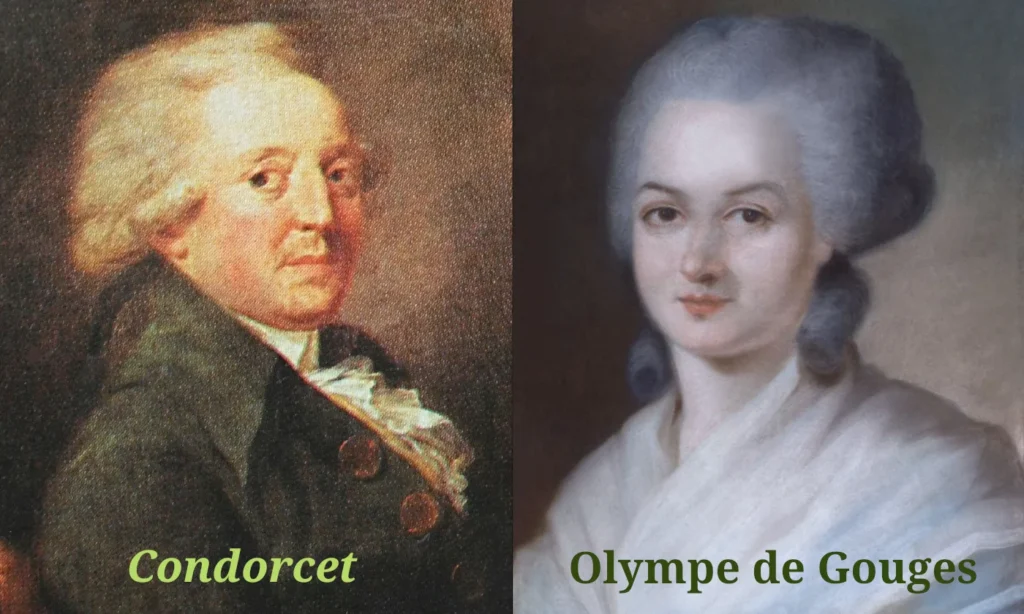
The impression most people have of the French Revolution is a one of sensible moderates who were overcome by the radical extremists of Robespierre who then drowned the Revolution in blood. Jonathan Israel doesn’t dispute that part of the story but places on center stage a group of democratic republicans who briefly gained control of the Revolution and came close to establishing the first true modern democracy – before Robespierre staged the coup that led to them being sent to the guillotine. The Roots of the Revolution in the Radical Enlightenment Johnathan Israel has made the Enlightenment his main specialisation.…

Returning Fallibilism to the Forefront of Liberalism – The Importance of Maintaining Clear Philosophical Foundations
·
·
Across Western democracies, political debate is becoming more polarised and more fragile at the same time. Many voters feel that ideas cannot be discussed openly, while political parties increasingly struggle to explain what they actually stand for beyond individual policies. When parties lose the ability to articulate their philosophical foundations, politics becomes reactive rather than principled. It’s all very nice and easy to ask voters to vote tactically against people they dislike. That will always be part of politics. Getting voters to vote for your policies, even if for different reasons, can work too. Or parties can make pragmatic compromises.…
Eyes right for the centre left
·
·
For well over a century, centre-left politics has been the engine of progressive change in Britain – building the welfare state, championing civil liberties, advancing social equality, and managing the economy with both competence and compassion. Yet today, many who hold these values find themselves politically homeless, watching as the very ground beneath their feet shifts inexorably rightward. The centre has moved. And if you haven’t noticed, you might be standing further right than you think or indeed want. Consider where we are. The Labour Party, once the champion of social democracy, now operate within a narrower fiscal envelope than Gordon…