Write for us!
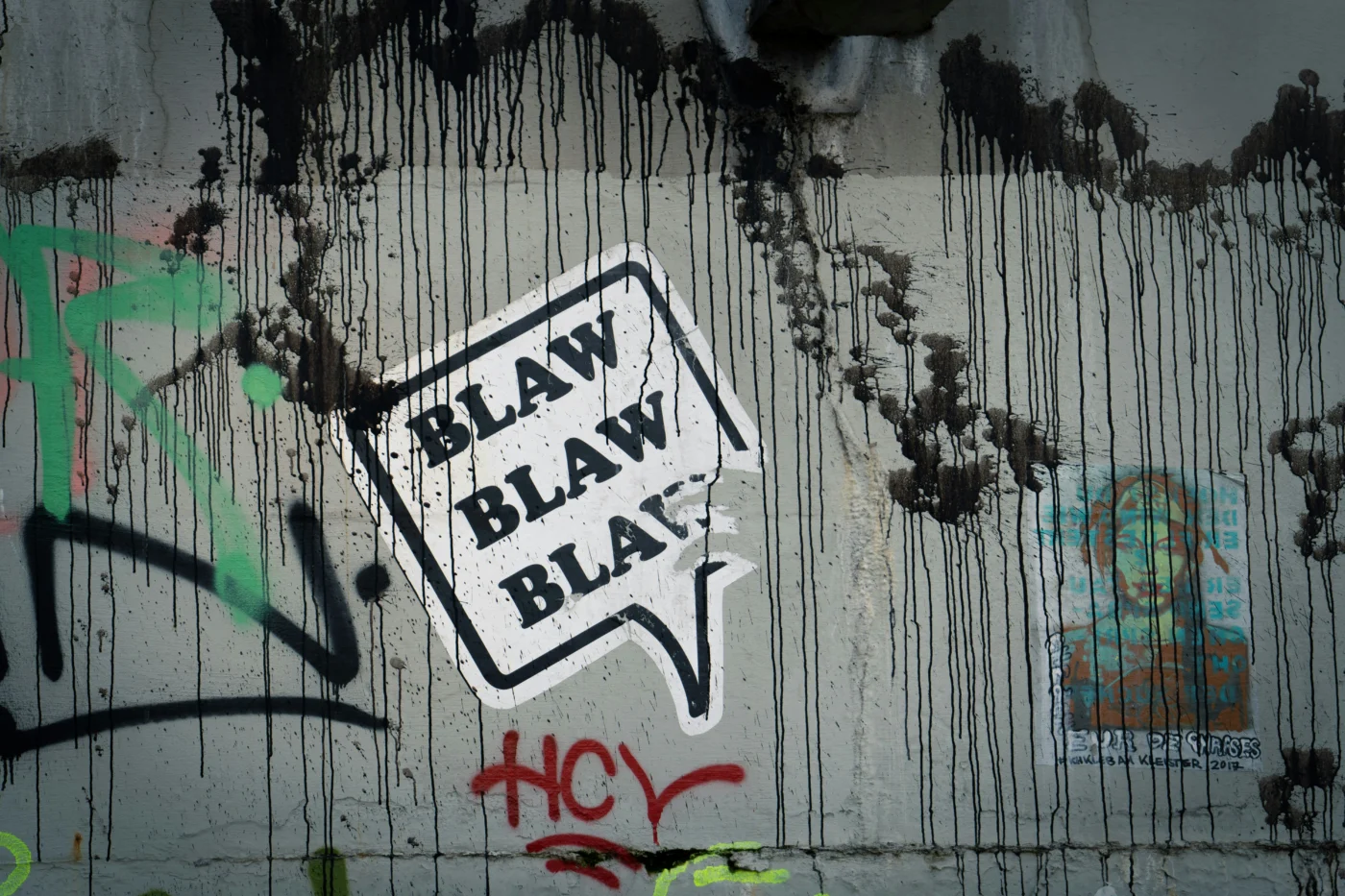
Few things are more confidently delivered, or more frequently wrong, than a famous quotation. We misquote for all sorts of reasons – faulty memory, wishful thinking, political convenience, or simple repetition of someone else’s error. But the misquote is rarely innocent. More often than not, the distortion tells us something interesting about the distorter.
“Elementary, my dear Watson”
Sherlock Holmes never said it. Not once across all of Arthur Conan Doyle’s stories. Holmes does say “elementary” in some stories, and obviously in the stories he does address Watson, but never together in that form. The phrase was cemented through stage and film adaptations. This is, though, the benign end of the misquote spectrum (a piece of cultural mythology that has become more real than the original text.)
“Elementary, my dear Watson” a companion in Oscar Wilde
Wilde is also a great attractor of many a witty misattribution. If a remark is sharp, paradoxical, and vaguely cynical, it tends to acquire his name somewhere along the way. “The definition of a gentleman is someone who is never rude unintentionally” is one of dozens of quotes assigned to him without reliable foundation. The same is true of Churchill, who has had more words put in his mouth than almost any other historical figure. If a quote needs gravitas rather than wit, Churchill’s name gets attached. Neither man seems to have minded, in life, both were prolific enough that the fakes blend in comfortably with the genuine article.
“The only thing necessary for the triumph of evil is for good men to do nothing”
Widely attributed to Edmund Burke, but no such quote exists anywhere in his writings. It may be a loose paraphrase of various things Burke wrote, or may originate elsewhere entirely. This is misattribution as credibility laundering, a sentiment that feels like it ought to have Enlightenment authority behind it, so Burke’s name gets borrowed. The quote is not wrong, exactly, but it is not Burke’s, and the attribution matters because it implies a philosophical tradition that may not actually support the use being made of it.
“Power corrupts; absolute power corrupts absolutely”
Close, but not quite. Lord Acton wrote in an 1887 letter: “Power tends to corrupt, and absolute power corrupts absolutely.” The inclusion of the word tends is important and tends does a lot of ‘lifting’. Acton was making a careful, probabilistic historical observation, not pronouncing an iron law. Dropping that single word transforms a nuanced argument into a blunt absolute, which is then wielded by dullards, with a confidence Acton himself never intended. It is a small alteration with significant consequences for how the idea is applied.
“God does not play dice”
Einstein did say something close to this, but here it’s about the context. In this oft-quoted line, the context is almost always stripped away entirely. He was expressing a specific philosophical discomfort with the probabilistic nature of quantum mechanics – a position in an ongoing and highly technical debate with Nils Bohr and others about the foundations of physics. It is routinely quoted as a general statement about determinism, divine order, or the nature of the universe, entirely detached from its scientific meaning. Einstein was not making a theological point. He was losing an argument with quantum theory, and history has repackaged his resistance as some sort of latent theistic profundity.
“We are all socialists now”
Often attributed to Winston Churchill, this was actually said by the Liberal Chancellor Sir William Harcourt in 1887 and even then was more an ironic observation than political declaration. The Churchill misattribution is instructive: he is so associated with a certain kind of sweeping historical pronouncement that quotes migrate to him naturally. The real Harcourt quote, in its proper context, is actually more interesting, as it was a Victorian Liberal acknowledging the direction of political travel with rueful wit. The Churchill version just sounds like a feeble warning by comparison.
“England is the mother of parliaments”
One of the most persistent misquotes in British political life. The radical MP John Bright did say these words (in Birmingham in 1865) but the misquote lies entirely in how they have been applied ever since. Bright was making a point about England’s responsibility to extend democratic reform at home, particularly around expanding the voting franchise to working men. He was not, as the phrase is almost always deployed, offering a satisfied boast about British democratic superiority to the world. The sentiment has been lifted from its reforming, radical context and repackaged as establishment self-congratulation. In practical terms, the opposite of its original intent. A quote by a radical has become a conservative’s comfort blanket.
“Rivers of Blood”
Enoch Powell never actually used this phrase. In his controversial April 1968 speech in Birmingham, he quoted (or claimed to quote) a constituent, before reaching for a line from Virgil’s Aeneid: “Like the Roman, I seem to see the Tiber foaming with much blood.” The “rivers of blood” label was attached by the press almost immediately, and it has proved impossible to dislodge.
This matters for several reasons. Powell was consciously invoking a classical allusion, and doing so at one remove. “I seem to see” was a rhetorical framing considerably more oblique than the kneejerk tabloid shorthand that replaced it. More significantly, the reduction to a three-word slogan has made the speech nigh-on impossible to discuss honestly ever since. Those who invoke it as prophecy typically haven’t read it never mind understood it. Those who condemn it (often with entirely legitimate grounds) are sometimes simply condemning the slogan rather than engaging with the actual argument, its evidence, and where its reasoning was dishonest or inflammatory.
The misquote has turned the speech into a political Rorschach test: people respond to a phrase rather than an argument. That Powell’s speech was incendiary, that it contributed to a climate of hostility toward Commonwealth immigrants, and that it rightly ended his front-bench career, are not seriously disputed. But the “rivers of blood” label has frozen it as a pure expression of inflammatory racism, which ironically forecloses the more uncomfortable question of how democratic societies should debate immigration policy at all, and we are witnessing what happens when that debate is avoided rather than engaged.
Unlike most misquotes in this article, this one made its subject sound cruder than he was. That’s not a defence of Powell, but an observation about what the distortion has cost public discourse.
And finally – Misquoting Godwin’s Law
Mike Godwin’s 1990 observation – that as any online discussion grows longer, the probability of a comparison involving Nazis or Hitler approaches, was not a joke. For some though it has been treated as a joke. It was a deliberate counter-meme, a piece of rhetorical inoculation devised because Godwin was frustrated by the lazy proliferation of Nazi comparisons in early internet forums. His idea was that by making people aware of the pattern, he could encourage them to pause before reaching for the most extreme available reference. To slow down. To ask themselves: is this comparison actually doing any analytical work, or am I simply deploying an insult?
Godwin wanted critical appraisal, not prohibition. He has said explicitly and repeatedly that his law was never intended to render Nazi comparisons off-limits. When comparisons are genuinely apt – when patterns of behaviour, rhetoric, or policy meaningfully echo those of 1930s Germany, the comparison is not only legitimate, it may be morally necessary. Godwin has actually, personally intervened in public debates to confirm, ‘this one stands, I’m not invoking my own law here.’
The bitter irony is that his corrective tool has been turned into its precise opposite by people who should know better. People who believe they are the critical thinker. It has become a silencing mechanism deployed by those who wish to avoid critical appraisal rather than encourage it. Someone raises a historically grounded parallel, and instead of engaging with the substance – is this comparison accurate, where does it hold, where does it break down, the response is simply “Godwin’s Law,” as though that were somehow a logical refutation. It is not. It is intellectual vacuity dressed up as a rule of debate.
Using misquotes may have a purpose
Which brings us back to where we began. Misquotes are rarely just careless. They are acts of recruitment, pressing historical figures and ideas into service for modern arguments, stripping away inconvenient complexity. The Bright misquote turns a radical into a conservative. The Burke misattribution borrows Enlightenment authority. The Acton edit hardens a nuanced observation into a blunt weapon. The Powell reduction shuts down a difficult conversation by replacing argument with slogan. And the Godwin misuse takes a tool designed to make us think more carefully, and uses it to stop us thinking at all. The next time someone reaches for a famous quote to clinch an argument, it is worth asking: is that really what was said? And if not, what does the gap between the original and the version we prefer tell us about what we or they are actually trying to do?