Write for us!
Democracy

Why World Government Would Be a Bad Idea

·
·
In 1964, the Labour Party manifesto declared an aspiration for a single world government Labour always regarded the cold war strategies as a second best, forced on us by Russia’s obstinacy and remained faithful to its long-term belief in the establishment of east-west co-operation as the basis for a strengthened United Nations developing towards world government. World Government is not a mainstream idea in UK politics – and I can’t imagine today’s Labour Party going there. But within liberal and progressive circles, there’s some sympathy for the concept, presumably motivated by that liberal sense of internationalism and a desire to…

The Ballot and the Manipulated: Has Democracy Lost Its Way?
·
·
Other than being friends, Dan and I don’t have much in common on paper. He was born into poverty in Liverpool, left school at sixteen, joined the army, protested nukes at Greenham Common, drove taxis, raised a couple of children alone on next to nothing, and arrived at philosophy and anarchism through sheer intellect led bloody-minded curiosity. He’s precisely the kind of intellect that Stalin would have sent to Siberia. Me on the other hand, I came from a middle-class background that turned out to be as fractured as any – a mother who resented me, an early exit from…

Speaking About Democracy in the House of Lords
·
·
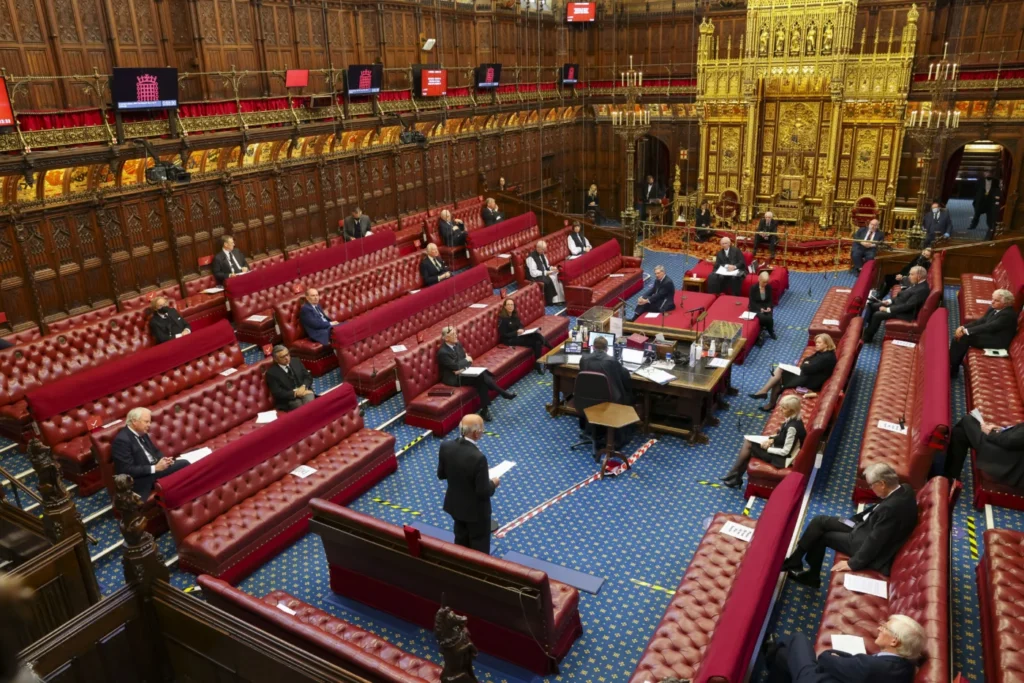
I spoke in the House of Lords on Monday about the irony of raising issues of democracy in what is now an entirely appointed chamber. My expectation when I entered the House in 1999, as a nominee of Paddy Ashdown, was that I would only serve for a few years before contesting elections for membership of the House in the promised, but never delivered, phase two of reform, promised after Tony Blair and Labour won the 1997 general election. Reform has been extremely slow I never thought that it would take 29 years to complete phase one, with the removal…
Proportional Representation Is Back on the Agenda but Which Kind?
·
·
When arguing for proportional representation in a country where voters have become used to first past the post, we hit the problem that voters expect their MP to be a good constituency MP, that is a kind of social worker who will sort out their problems if they’re unfairly treated by the state. Proportional representation can’t happen when you have seats returning one representative. Hence, under proportional representation, voters don’t get a single representative dependent exclusively on their votes – except with Additional Member Proportional, the system used in London and Scotland, they can. In London, the Assembly has 25…
The Death of Local Democracy: How English Planning Reform Is Silencing Communities (and Why Almost Nobody in Power Seems to Mind)
·
·
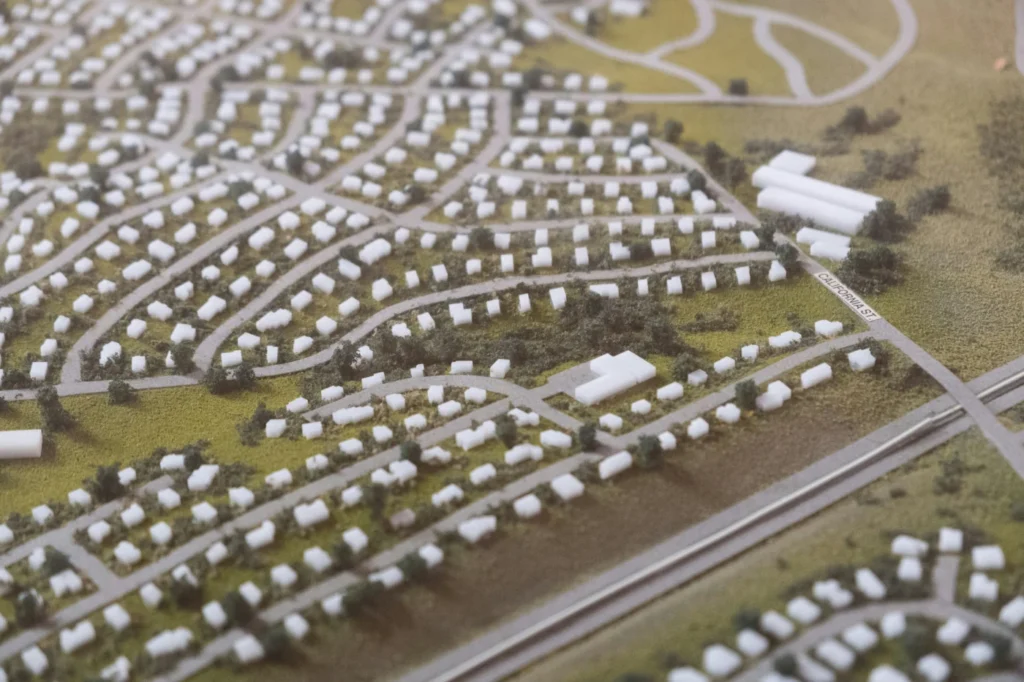
There is a particular kind of political sleight of hand that works best when performed quietly. Not in the dead of night, not through scandal, but through the patient accumulation of technical changes – each one framed as modernisation, each one a little harder to object to than the last, and each one moving power incrementally away from the people who are most affected by decisions and toward those who have the most to gain from making them. The Planning and Infrastructure Act 2025 is one of the most significant examples of this in a generation. It received Royal Assent…
Another Referendum?
·
·
The problem of asking people what they want in a referendum is that after the event, those happy with the result declare that the matter now settled and those who do not like the result then want another referendum at a later date. The problem for the Liberal Democrats is the party has held both views at the same time, following the Scottish Independence referendum and then the Brexit vote. In Scotland, the Party was happy with the result after the Independence Referendum, as the party campaigned strongly against independence, although it was estimated that 40% of Liberal Democrat voters…
The Scottish Parliament Election
·
·
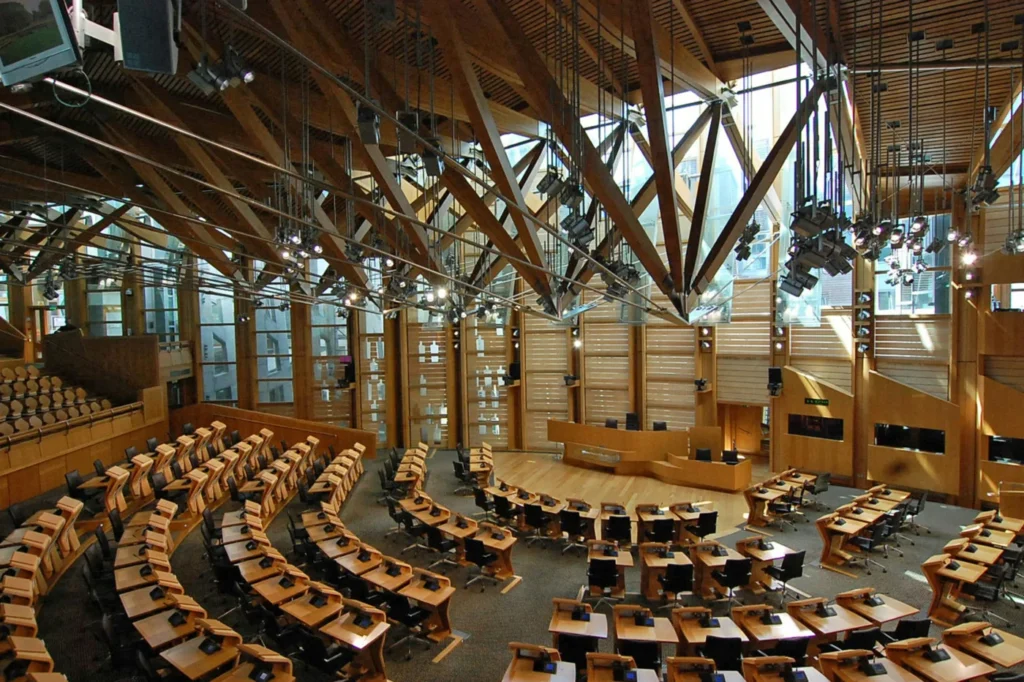
The recent elections to the Scottish Parliament saw an increase from 4 to 10 Liberal Democrat MSPs at Holyrood, compared to 58 for the SNP, 17 each for Labour and Reform, 15 Greens and 12 Conservatives. Now the sixth largest party in the Scottish Parliament, the Liberal Democrats have fallen from 17 MSPs in the first Parliament in 1999, when they entered a coalition to form the first devolved government with Labour 27 years ago. In the following two elections the Lib Dems only lost one seat. The party has celebrated this recent result as a great success, but what…
A Liberal Approach to Restructuring Local Government in England
·
·
A few years back I was tasked by my party, namely The Liberal Party, in my capacity as chair of the policy sub-committee, to formulate policies for local governance. This was a subject I had not studied before and I soon realised what a fragmented and disjointed system it is. Hence, the need for reform. England has in some places up to four layers of Local Government (Scotland, Wales and Northern Ireland all have one by contrast, namely unitary authorities) but by the same token, England is one of the most centralised states, certainly in Europe if not the OECD.…

“Does Magna Carta Mean Nothing to You? Did She Die in Vain?”
·
·
In the current political climate and with the increase in the intolerance of others, human rights have acquired a curious reputation. To listen to certain rightward leaning voices on the airwaves, one might conclude that they are a recent foreign invention – a bureaucratic imposition dreamed up by progressive ‘lefty’ lawyers in Strasbourg to frustrate the will of the British people. Nothing could be further from the truth. The idea that every human being possesses inherent dignity that no state may trample upon is not a creation of the twentieth century. It is, in fact, one of the oldest political…

How Not to Make a Magna Carta
·
·
A “New Magna Carta” was one of Ed Davey’s brand-new announcements at his speech to the Spring Conference on Sunday (15 March 2026). Let’s set aside the obvious question of how this has suddenly appeared as a new LibDem policy proposal without any consultation with the membership, and what this means for internal party democracy. After all, few Liberal Democrats would disagree with the principle of a written constitution. And it is certainly consistent with liberal values. But was what Ed was proposing really a good idea? I’m going to say no. It looks to me like he has taken…