Write for us!
International law

Why World Government Would Be a Bad Idea

·
·
In 1964, the Labour Party manifesto declared an aspiration for a single world government Labour always regarded the cold war strategies as a second best, forced on us by Russia’s obstinacy and remained faithful to its long-term belief in the establishment of east-west co-operation as the basis for a strengthened United Nations developing towards world government. World Government is not a mainstream idea in UK politics – and I can’t imagine today’s Labour Party going there. But within liberal and progressive circles, there’s some sympathy for the concept, presumably motivated by that liberal sense of internationalism and a desire to…
It’s Complicated and Superficial Knowledge Doesn’t Help
·
·
Any serious discussion of the Israeli Palestinian conflict risks becoming incomplete when it treats the Palestinian Nakba as the only refugee tragedy born from the collapse of the British Mandate and the wars that followed. The suffering of Palestinian Arabs in 1948 was profound and historically significant. Hundreds of thousands were displaced during a brutal conflict whose consequences remain unresolved today. But modern discussion often overlooks an equally consequential human tragedy: the destruction of ancient Jewish communities across the Arab and wider Middle Eastern world. Tragedies affected both communities Between roughly 800,000 and 1,000,000 Jews fled, were expelled, or were…

Netanyahu and Gaza – How Should Britain Respond?
·
·
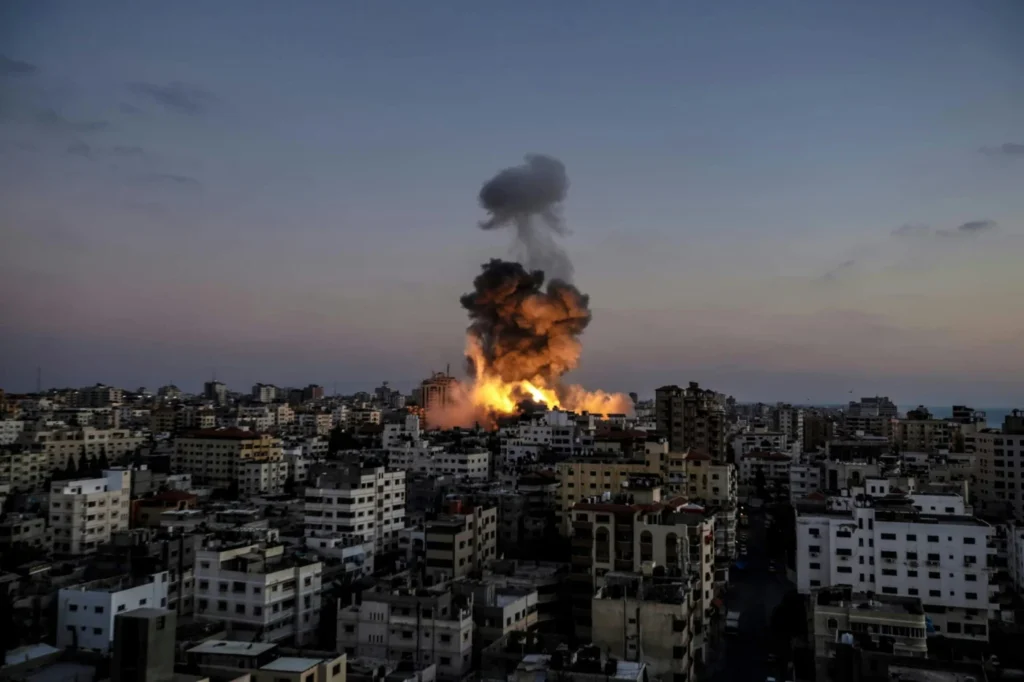
The Gaza Genocide has become an element in the long-planned continuation of the Greater Israel project, but it was initially an experiment. For Netanyahu, it was a test of the resolve of the western powers to uphold decades-old ideas about human rights and the ‘rules of war’ established after WWII, which were designed to protect civilians and outlaw the annexation of land occupied during hostilities. He must have been surprised when there was so little response when he started pushing the envelope, but as time went on it became apparent that with active American encouragement, and a more passive kind…
The Commissioner Who Lost His Neutrality…
·
·
There is a principle at the heart of British policing so fundamental that it predates the modern democratic state: the constable, whatever their rank, enforces the law impartially and takes no political sides. It is this principle that distinguishes a police service from a political instrument. It is also the principle that Metropolitan Police Commissioner Sir Mark Rowley has, by any honest assessment, repeatedly and seriously compromised. The evidence is not a matter of interpretation. It is a pattern of documented public statements, selective enforcement decisions, and a conspicuous failure to fulfil a clear legal duty, one that sits in…
The Silence They Cannot Buy: Iran, Antisemitism and the Weaponisation of Fear
·
·
Something has gone badly wrong with British political discourse, and the elections on Thursday will be the first formal reckoning with it. Three threads run through the disorder, and they share a single pattern: a political and media establishment using manufactured crises, convenient attributions, and the deliberate conflation of dissent with hatred to avoid accountability for its own failures. The threads are distinct. The logic connecting them is not. The boy who cried wolf (the wolf being Iran) When a seventeen-year-old lad is found with a petrol can after ambulances have been torched, and when a man with evident and…
Saving UNRWA Not Only Supports Palestine Refugees but Also the Rules‑Based Order
·
·
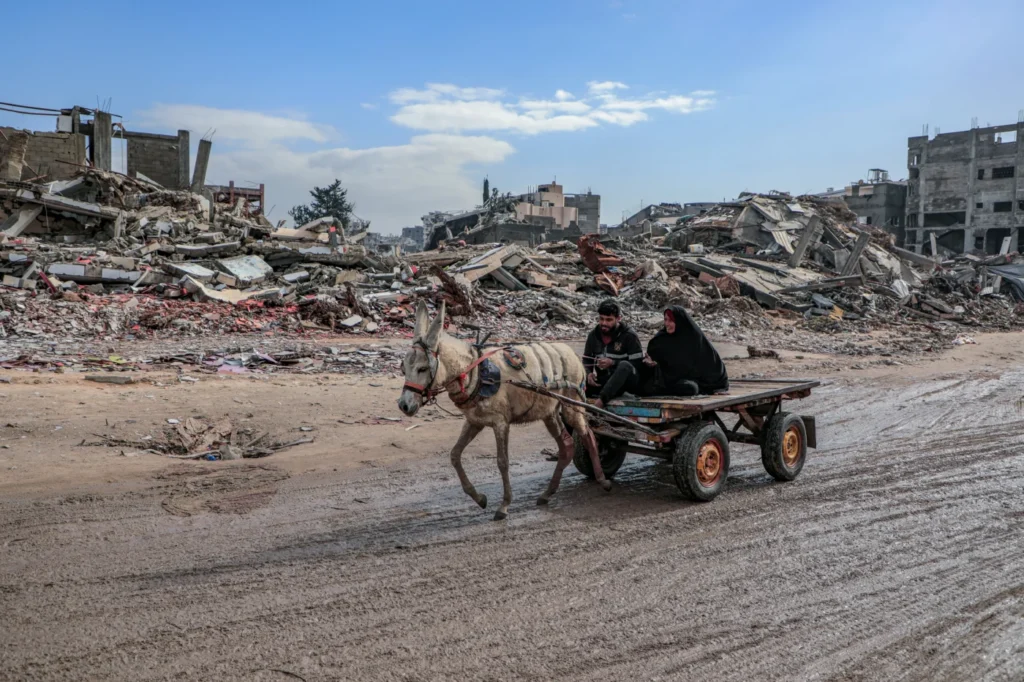
The continuing existence of the United Nations Relief and Works Agency for Palestine Refugees is in doubt. The UK is uniquely placed to take the initiative. I’d like to start with a question, one I put to some friends last week when, given that so many States are happy to disregard it, they scoffed at the so-called international rules-based order. ‘Would you prefer to live in a world bereft of even the most basic rules of conduct,’ I asked, ‘or would you prefer the body of international law to exist, even if so many States violate it with impunity?’ My…