Write for us!
Op-eds
Opinion and commentary on UK politics and Liberal Democrat ideas.

The Scottish Parliament Election

·
·
The recent elections to the Scottish Parliament saw an increase from 4 to 10 Liberal Democrat MSPs at Holyrood, compared to 58 for the SNP, 17 each for Labour and Reform, 15 Greens and 12 Conservatives. Now the sixth largest party in the Scottish Parliament, the Liberal Democrats have fallen from 17 MSPs in the first Parliament in 1999, when they entered a coalition to form the first devolved government with Labour 27 years ago. In the following two elections the Lib Dems only lost one seat. The party has celebrated this recent result as a great success, but what…

A Liberal Approach to the State: A Twenty‑First Century Concept of the State’s Role
·
·
Historically, liberals viewed the state with caution and perhaps even indifference. Classical Liberals (like me), argued for a state which is restricted by a codified constitution, separation of powers and respect for the rule of law. Ultimately, the state is there to serve the interest of individuals, not to control them. However, this concept of the state is restricted to a somewhat archaic way of thinking that emerged out of the enlightenment period of the 17th and 18th century, most notably from thinkers such as John Locke. However, over three hundred years later and with the incredible advancement of technology…
Netanyahu and Gaza – How Should Britain Respond?
·
·
The Gaza Genocide has become an element in the long-planned continuation of the Greater Israel project, but it was initially an experiment. For Netanyahu, it was a test of the resolve of the western powers to uphold decades-old ideas about human rights and the ‘rules of war’ established after WWII, which were designed to protect civilians and outlaw the annexation of land occupied during hostilities. He must have been surprised when there was so little response when he started pushing the envelope, but as time went on it became apparent that with active American encouragement, and a more passive kind…
A Liberal Approach to Restructuring Local Government in England
·
·
A few years back I was tasked by my party, namely The Liberal Party, in my capacity as chair of the policy sub-committee, to formulate policies for local governance. This was a subject I had not studied before and I soon realised what a fragmented and disjointed system it is. Hence, the need for reform. England has in some places up to four layers of Local Government (Scotland, Wales and Northern Ireland all have one by contrast, namely unitary authorities) but by the same token, England is one of the most centralised states, certainly in Europe if not the OECD.…
The Commissioner Who Lost His Neutrality…
·
·
There is a principle at the heart of British policing so fundamental that it predates the modern democratic state: the constable, whatever their rank, enforces the law impartially and takes no political sides. It is this principle that distinguishes a police service from a political instrument. It is also the principle that Metropolitan Police Commissioner Sir Mark Rowley has, by any honest assessment, repeatedly and seriously compromised. The evidence is not a matter of interpretation. It is a pattern of documented public statements, selective enforcement decisions, and a conspicuous failure to fulfil a clear legal duty, one that sits in…
When Will the Party Give the Electorate a Reason to Vote for Us?
·
·
Before the party gets too self-congratulatory (i.e. ‘eight years of gains’), a reminder. In the 48 years since the start of the Thatcher era there have been only eight in which the estimated national vote of the LibDems in local council elections has been lower than in 2026 (and that is if we accept the upper estimate of 16% rather than the lower one, 14%, in which case the number of years is four). Two of those years were 1979 (14%) and 1980 (13%). The worst run was between 2012 and 2016 when the estimated proportions of the national polls…

The Silence They Cannot Buy: Iran, Antisemitism and the Weaponisation of Fear
·
·
Something has gone badly wrong with British political discourse, and the elections on Thursday will be the first formal reckoning with it. Three threads run through the disorder, and they share a single pattern: a political and media establishment using manufactured crises, convenient attributions, and the deliberate conflation of dissent with hatred to avoid accountability for its own failures. The threads are distinct. The logic connecting them is not. The boy who cried wolf (the wolf being Iran) When a seventeen-year-old lad is found with a petrol can after ambulances have been torched, and when a man with evident and…

Time for a Liberal Approach to Fiscal Policy
·
·
Fiscal policy in the UK needs a massive overhaul and indeed a fresh pair of eyes – a liberal, specifically Keynesian approach, would I believe, be a successful approach to treating the ills of the decaying UK economy. Taxation in the UK has become synonymous with overcomplexity and opaqueness: it’s time for a rethink. The British tax code is an incredible 24,000 pages long. To put that into perspective, Hong Kong’s is a mere 350 pages. Ironically, the complexity of the UK Tax Code appeals to the very rich, who can afford to employ advisers who help them to exploit…
Guns, Wealth and Welfare – Who Carries the Burden for Defence?
·
·
The argument for democratic reform on defence, taxation and the social contract. Britain is in the middle of a debate about defence spending. On the surface, it looks like a straightforward question of national security; how much should the country spend, and how quickly? But scratch beneath that surface and a far more uncomfortable set of questions emerges: who actually benefits from military power, who is being asked to pay for it, and what does the answer reveal about the kind of society Britain truly is? The answers are not flattering. The welfare-for-weapons trade-off In early 2025, Chancellor Rachel Reeves…

From Blair’s ‘Tough on Crime/Tough on the Causes of Crime’ to Placing Sticking Plasters Over Gaping Wounds Under Starmer — How Britain’s Shoplifting Crackdown Exposes a Justice System Built to Protect Property Over People, and Power Over Accountability
·
·
On Monday, Prime Minister Keir Starmer stood before the USDAW shop workers’ union and declared an end to the shoplifting “free-for-all.” It was the kind of speech that plays well in a headline cycle: tough, purposeful, protective of honest working people against those who “cheat the system.” The government announced stiffer penalties for shoplifters, 3,000 additional neighbourhood police officers, a £5 million specialist intelligence unit targeting retail crime gangs, and a new standalone offence for assaulting a shop worker. The statistics underpinning the announcement were, at best, modest. According to the Office for National Statistics, shoplifting offences fell from 516,611…
It’s Time to Clean the Augean Stables
·
·
Natalie Bird was vilified for wearing a T-shirt with a slogan bearing the dictionary definition of ‘woman’. She was banned from standing as a candidate and suspended from the party. She took the party to court and won. John Tilley is the former leader of Kingston Council. He was subjected to an internal party discipline hearing for objecting to a proposal that conference attendees should be required to wear badges stating their preferred pronouns. He wrote that there were more important matters that required our attention. He was sentenced to a ten year ban on holding party office or standing…
Access Denied: How the Liberal Democrat Leadership is Sidelining Women
·
·
Last week saw another interview with Ed Davey telling a Lib Dem trans activist that he had been listening to trans people in the Party after the Supreme Court ruling on the meaning of woman in the Equality Act. Yet another illustration of the leadership jumping straight to placation mode when something upsets the trans lobby… Part of a pattern The 2022 changes to the unlawful Lib Dem Definition of Transphobia are another case in point. The Party held a special meeting with trans people just prior to amending the Definition. Several were invited to the House of Commons to…
The Compassion Trap: Herbie’s Law and the Patients No‑One Cares About
·
·
A proposed law to end animal testing in UK medical research by 2035 is being sold as an act of compassion. But the real human cost of getting this wrong has been almost entirely absent from the debate — and it will fall hardest on those who can least afford it. Herbie is a rabbit. He was bred for a laboratory, tattooed on his ear, and (as the story goes) rescued before his fate could be sealed. He has since become the face of one of the most emotionally compelling campaigns in recent British politics: a push to ban all…

What Starmer Knew, and When
·
·
The Mandelson–Epstein connection was public knowledge long before the 2024 election. The question of how the Prime Minister could claim ignorance deserves scrutiny. Keir Starmer’s claim that he was unaware of the depth of Peter Mandelson’s relationship with convicted child sex offender and trafficker Jeffrey Epstein when he appointed him British Ambassador to the United States in December 2024, at best occupies shaky ground. The evidence that Mandelson posed a serious reputational and security risk was not hidden in classified files. Much of it was sitting in plain sight, reported by national broadcasters and newspapers, and filed in open US…

The Glass House Secretary General – George of the Bungle
·
·
George Robertson’s attack on the Starmer government ignores the seeds sown during his own tenure, or the 28-year trend that all parties have followed. When Lord George Robertson of Port Ellen took to the podium in Salisbury earlier this month to deliver the Edward Heath Annual Lecture, he did so with the moral authority of a man who had served as Secretary of State for Defence, who had led NATO for four years, and who had personally authored the current government’s Strategic Defence Review. His language was unsparing. Britain, he declared, was “underprepared, underinsured, under attack and not safe.” The…

The Road not Taken
·
·
In the autumn of 1986, Margaret Thatcher’s government abolished road service licensing for local bus services outside London (commonly called deregulation). The logic was market orthodoxy: competition would drive down costs, encourage innovation, and serve passengers better than the inefficiencies of public ownership ever had. Almost four decades later, the verdict is in, and it is damning. Bus journeys across England have fallen from 4.6 billion in 2009 to 3.6 billion in 2024. Outside London, bus mileage has collapsed by 29% compared to 2005. In the north of England, the decline is starker still: Transport for the North reports that…
Illiberalism in Defence of Liberalism
·
·
There is a long-standing mutual wariness between the Liberal Democrats and the continuing Liberal Party that anyone who has spent time around either organisation will recognise. What is perhaps surprising is that the sense of grievance seems, on balance, to run more strongly from the Liberal Democrat side than the other way around. This has sometimes led to accusations which, examined in the cold light of day, don’t quite survive reasonable scrutiny. They also seem to focus on one side’s behaviour rather than understanding that it is a two-way street. It would be churlish, in the first instance, not to…

Childhood Is Precious – It’s Time to Tackle Online Harm
·
·
Many people in the Party – especially at the grassroots – are totally unaware of the extreme libertarian approach that has been adopted to a whole range of issues that are most accurately framed as ‘sexual exploitation.’ From pornography to prostitution there has been a laissez-faire attitude and a presumption that somehow these matters are all about individual choice and can even be framed as ‘empowering.’ Of course, the majority of the sexual exploitation in these cases is against women and by men (for example in the UK 88% of people in prostitution are women and buyers are 95% +…

The Nuclear Deterrent and Reality in the UK Political Scene
·
·
The United Kingdom’s nuclear deterrent sits at the centre of a sharpening political debate. As billions are committed to renewing the Trident programme and deepening NATO nuclear cooperation, fundamental questions are being asked about strategic independence from the United States, about the true cost to Britain’s defence budget, about the burden the deterrent places on Royal Navy strategy, and about what each major party actually believes. This article surveys the landscape: the current programme, its fiscal and naval consequences, and where Labour, the Conservatives, the Liberal Democrats, and the Greens stand. The UK Nuclear Deterrent Today Britain’s deterrent rests on…

How Not to Make a Magna Carta
·
·
A “New Magna Carta” was one of Ed Davey’s brand-new announcements at his speech to the Spring Conference on Sunday (15 March 2026). Let’s set aside the obvious question of how this has suddenly appeared as a new LibDem policy proposal without any consultation with the membership, and what this means for internal party democracy. After all, few Liberal Democrats would disagree with the principle of a written constitution. And it is certainly consistent with liberal values. But was what Ed was proposing really a good idea? I’m going to say no. It looks to me like he has taken…
Saving UNRWA Not Only Supports Palestine Refugees but Also the Rules‑Based Order
·
·
The continuing existence of the United Nations Relief and Works Agency for Palestine Refugees is in doubt. The UK is uniquely placed to take the initiative. I’d like to start with a question, one I put to some friends last week when, given that so many States are happy to disregard it, they scoffed at the so-called international rules-based order. ‘Would you prefer to live in a world bereft of even the most basic rules of conduct,’ I asked, ‘or would you prefer the body of international law to exist, even if so many States violate it with impunity?’ My…
Has the Party Become Too Libertarian for Its Own Good?
·
·
Our membership and, in particular, our activists, are overwhelmingly middle-class men. Quite what the ratio is between men and women is unclear because the Party no longer collects data on the sex of members, but apparently the ratio in the Lib Dems is worse even than in the Reform Party. Is this impacting on our policies and Party culture? Are we steadily approving policies, at our regular state Party and federal Conferences, that might well suit a lot of men, but are a disaster for women and girls? Sex work is a questionable freedom Take our policy on prostitution, for…
A Plan for Young People
·
·
In this I want to propose an approach to two issues – youth unemployment and pensions for younger people. Youth unemployment has recently hit the news. As of the final quarter of 2025, the unemployment rate for 16-24-year-olds stands at 16.1%, the highest in a decade and now exceeding the EU average of 14.7%. Total UK unemployment is at 5.2%, a five-year high, but young people are disproportionately affected, with entry-level hiring stalling amid higher payroll costs from the 2025 National Insurance (NI) hike to 15% and minimum wage increases. Meanwhile given the UK’s declining birth rate, England and Wales…
Oil, Empire, and Resistance – A History of Western Interference in Iranian Affairs from 1909 to the current conflict
·
·
On 26 May 1908, a British drilling crew working for William Knox D’Arcy struck oil at Masjed Soleiman in the foothills of the Zagros Mountains. It was the first major oil discovery in the Middle East, and it would transform Iran’s relationship with the outside world forever. Within a year, the Anglo-Persian Oil Company (APOC) was incorporated, and the machinery of foreign control over one of the world’s most strategically vital nations was set in motion. What followed over the next century was a sustained pattern of British, and later American, interference in Iranian sovereign affairs — a story of…
Sex, Equality and the Law: Cutting Through the Noise – Explaining the Supreme Court Ruling and What’s Next
·
·
The fringe meeting offered by the LD group Liberal Voice for Women at York Novotel on Friday evening 13 March at 8:00 pm, looks set to enliven the whole weekend. The panel members are stellar names in feminist politics: Susan Smith is one of the successful appellants in the ‘For Women Scotland’ case against the bumbling SNP ministers. They had tried unlawfully to include transwomen (holders of a separate protected characteristic) in a positive action measure intended to appoint more female members to public boards in Scotland. Susan will recount her experiences of combatting injustice before, during and since that…
This Stupid Tax Rule is Harming the Country and Needs to Go
·
·
The Labour Government from 1997 to 2010 did many harmful things to the tax system. Although Gordon Brown when Chancellor of the Exchequer had a stellar reputation with much of the media, I always considered him a poor Chancellor. The reason is that he kept endlessly tinkering with the tax rules by introducing stealth taxes that he hoped people would not notice, but which had harmful side effects. However, blame for possibly the worst such stealth tax must be shared between Gordon Brown as Prime Minister and the late Alistair Darling who was the Chancellor of the Exchequer who announced…
Recasting Our Defence Priorities
·
·
Defence is an ever-increasing priority, and hence adequate spending on it is required. Yet debate too often focuses on how much to spend rather than what we want that spending to achieve. As Carl von Clausewitz famously noted in On War – war is the continuation of policy by other means. The political objective is the goal and military force is the means. If we are to justify increased defence spending — money that could otherwise be spent elsewhere — we must first be clear about the political objectives it is intended to serve. I put defence spending into roughly…
Eyes right for the centre left
·
·
For well over a century, centre-left politics has been the engine of progressive change in Britain – building the welfare state, championing civil liberties, advancing social equality, and managing the economy with both competence and compassion. Yet today, many who hold these values find themselves politically homeless, watching as the very ground beneath their feet shifts inexorably rightward. The centre has moved. And if you haven’t noticed, you might be standing further right than you think or indeed want. Consider where we are. The Labour Party, once the champion of social democracy, now operate within a narrower fiscal envelope than Gordon…
John Stuart Mill – Do His Values Still Matter to Liberal Democrats?
·
·
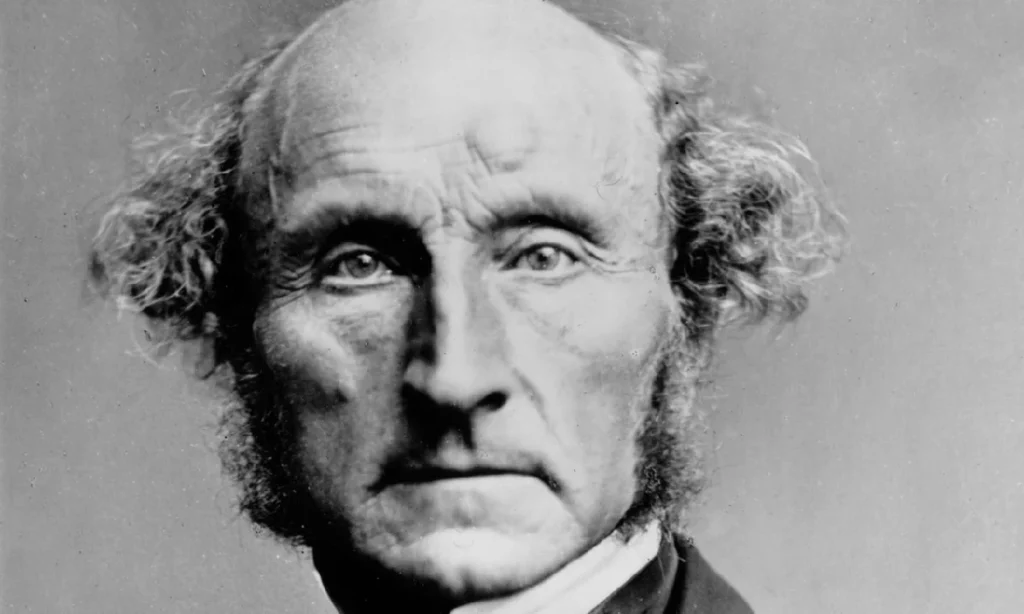
Modern political thought is built on foundations laid down largely in the last 300 years by men like Edmund Burke, Jeremy Bentham, Karl Marx – and for liberals, John Stuart Mill. In 1859 Mill’s seminal work, ‘On Liberty’ was published. It was the culmination of decades of thought and discussion and it is now recognised that the contribution of his wife, Harriet Taylor Mill was crucial to the endeavour. It is likely that she was responsible for sections of the book, though she died before its publication. A political philosophy that centres the individual The core tenet of ‘On Liberty’…
Have the LibDems Been Captured by “Authoritarian Progressivism”?
·
·
In the Lib Dems’ 35 year history, the ideological divisions that have emerged in the party have always, predictably, been along left-right economic fault lines, with Orange Bookers on the right and social democrats on the left. Meanwhile, social issues have been largely understood to be matters of conscience. The thread that knitted individuals together as a party was liberalism – a fundamental commitment to individual freedom tempered by an imperative to avoid harm.